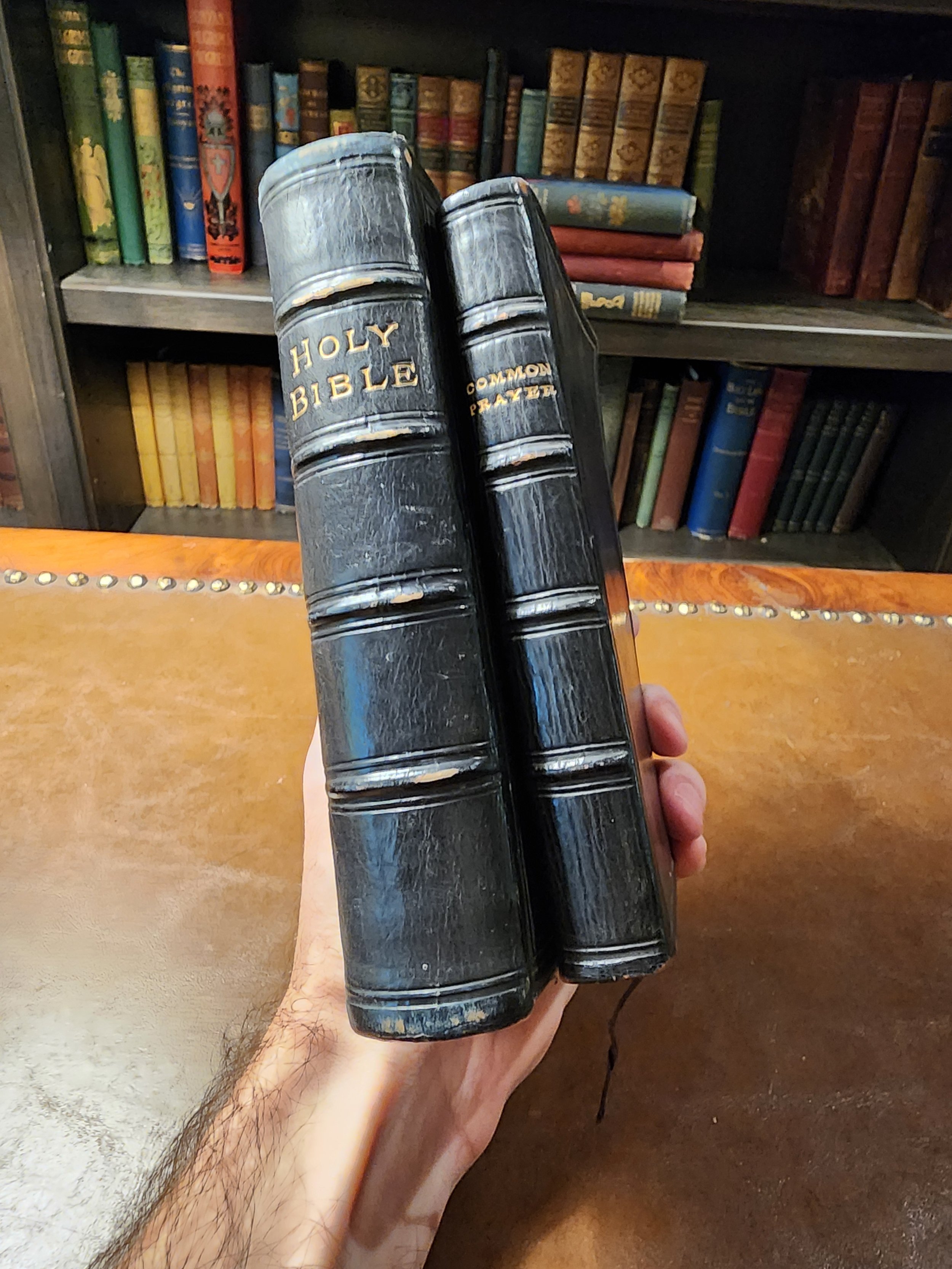
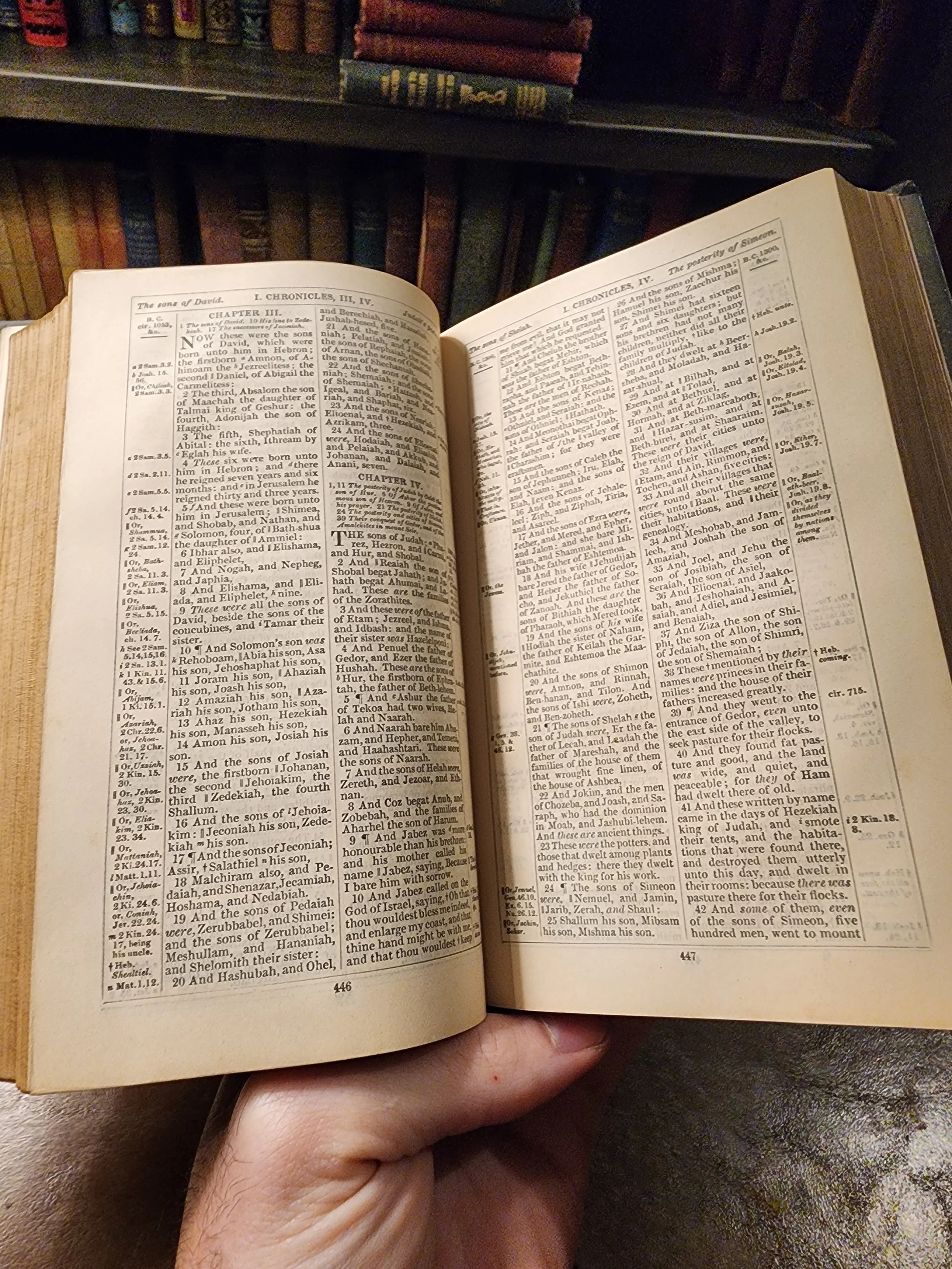
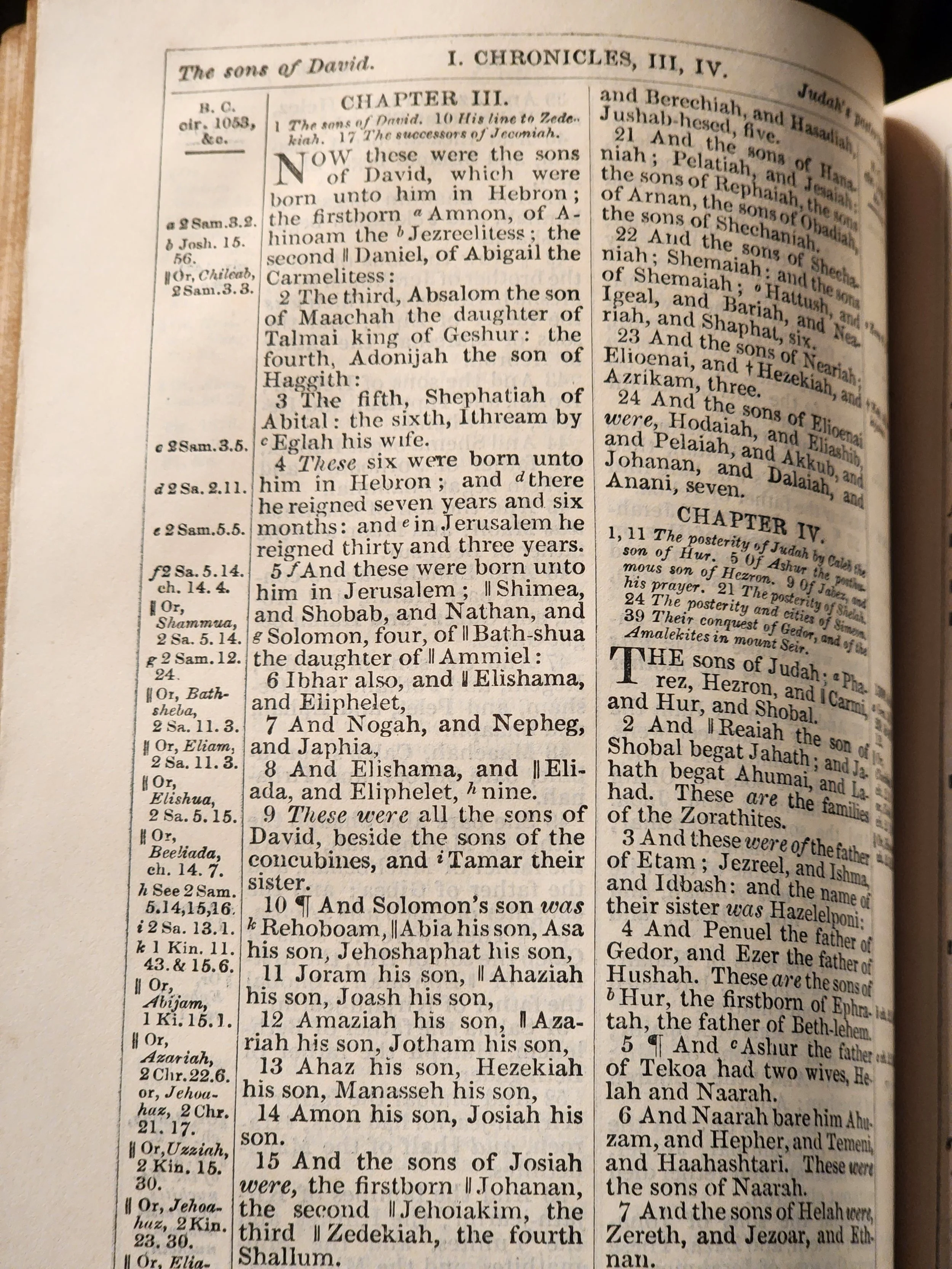
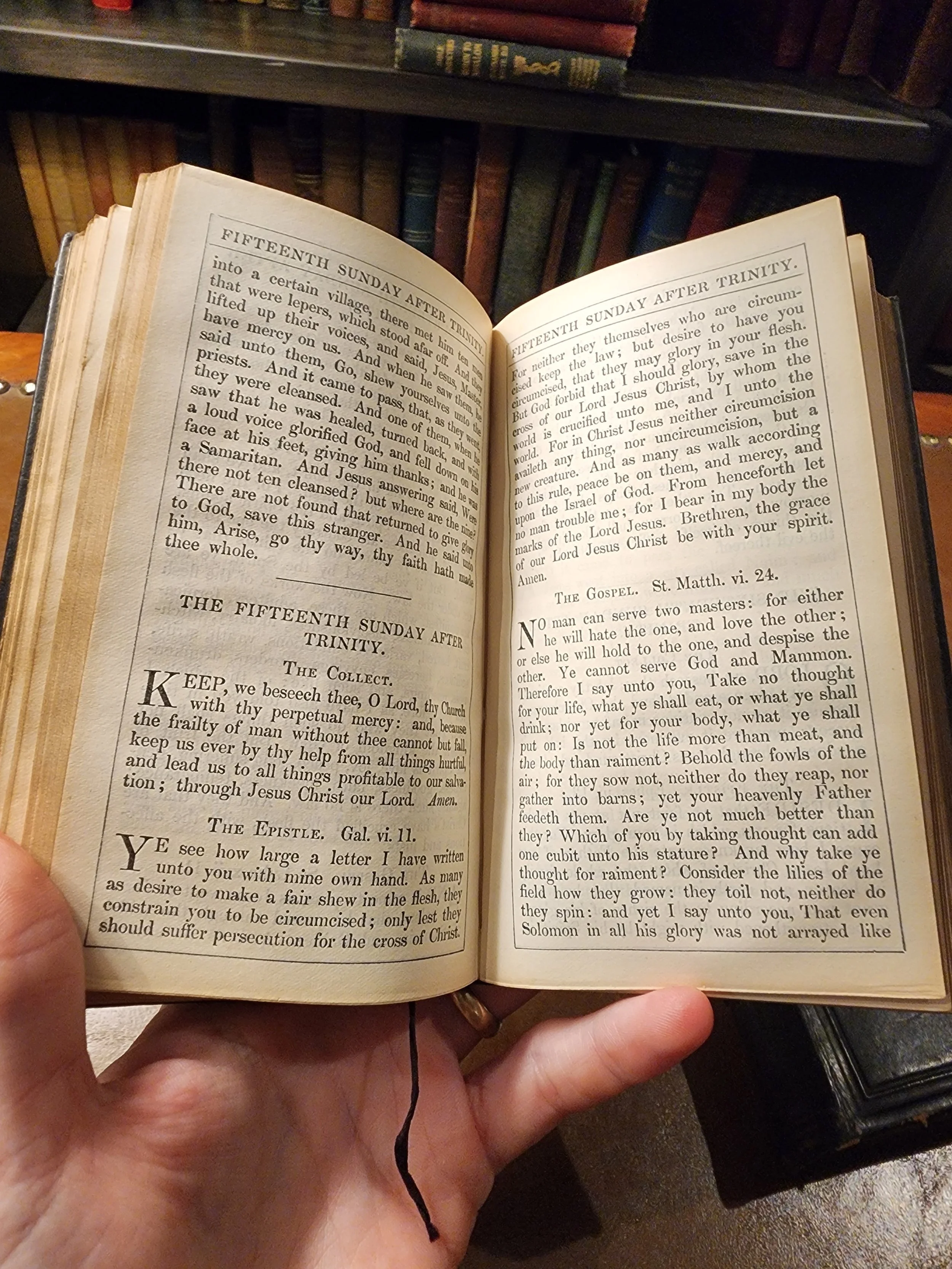
A beautiful black leather matching set of Oxford printings, the Holy Bible (Authorized Version/King James) and Book of Common Prayer, from c.1890.
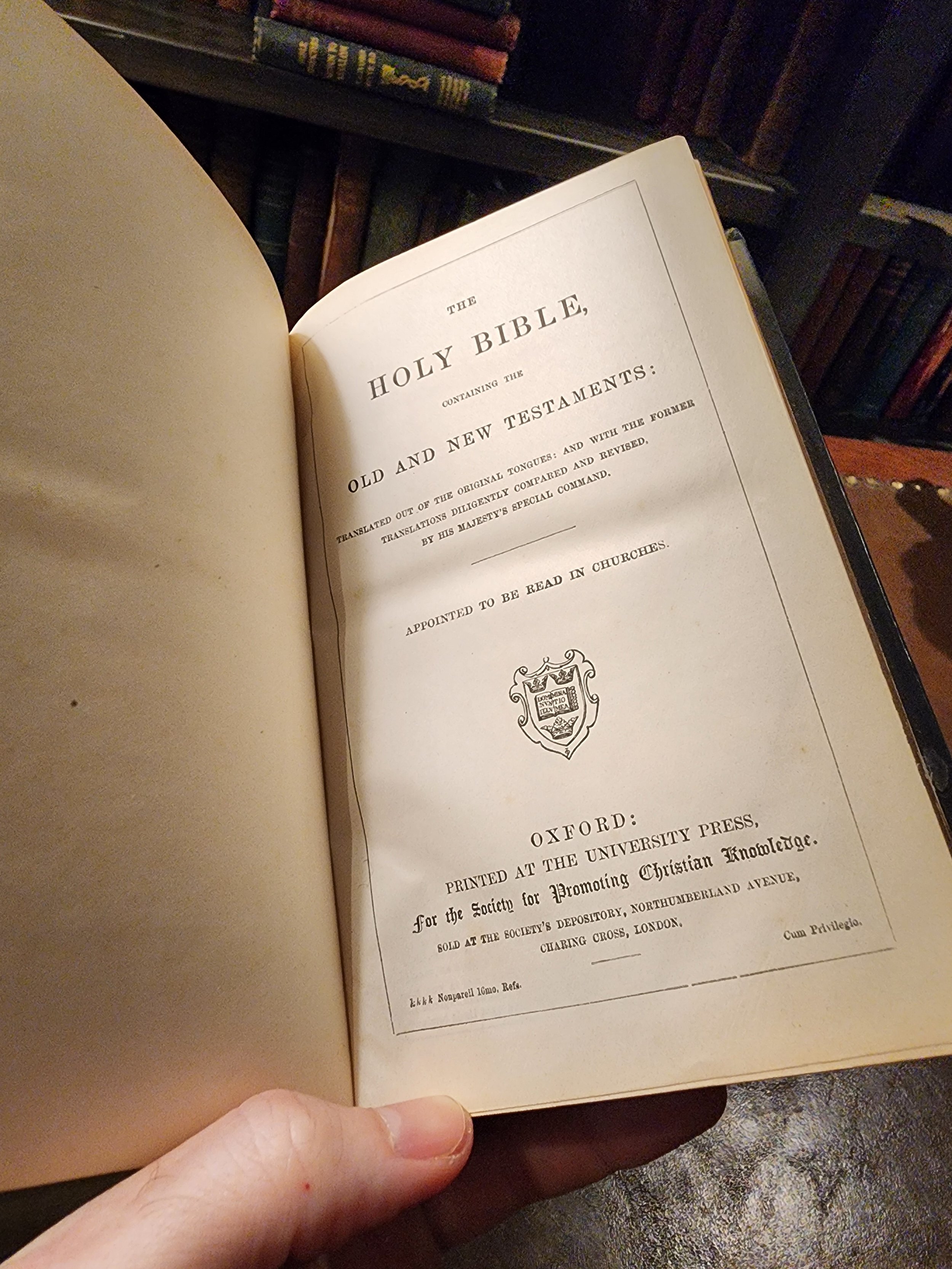
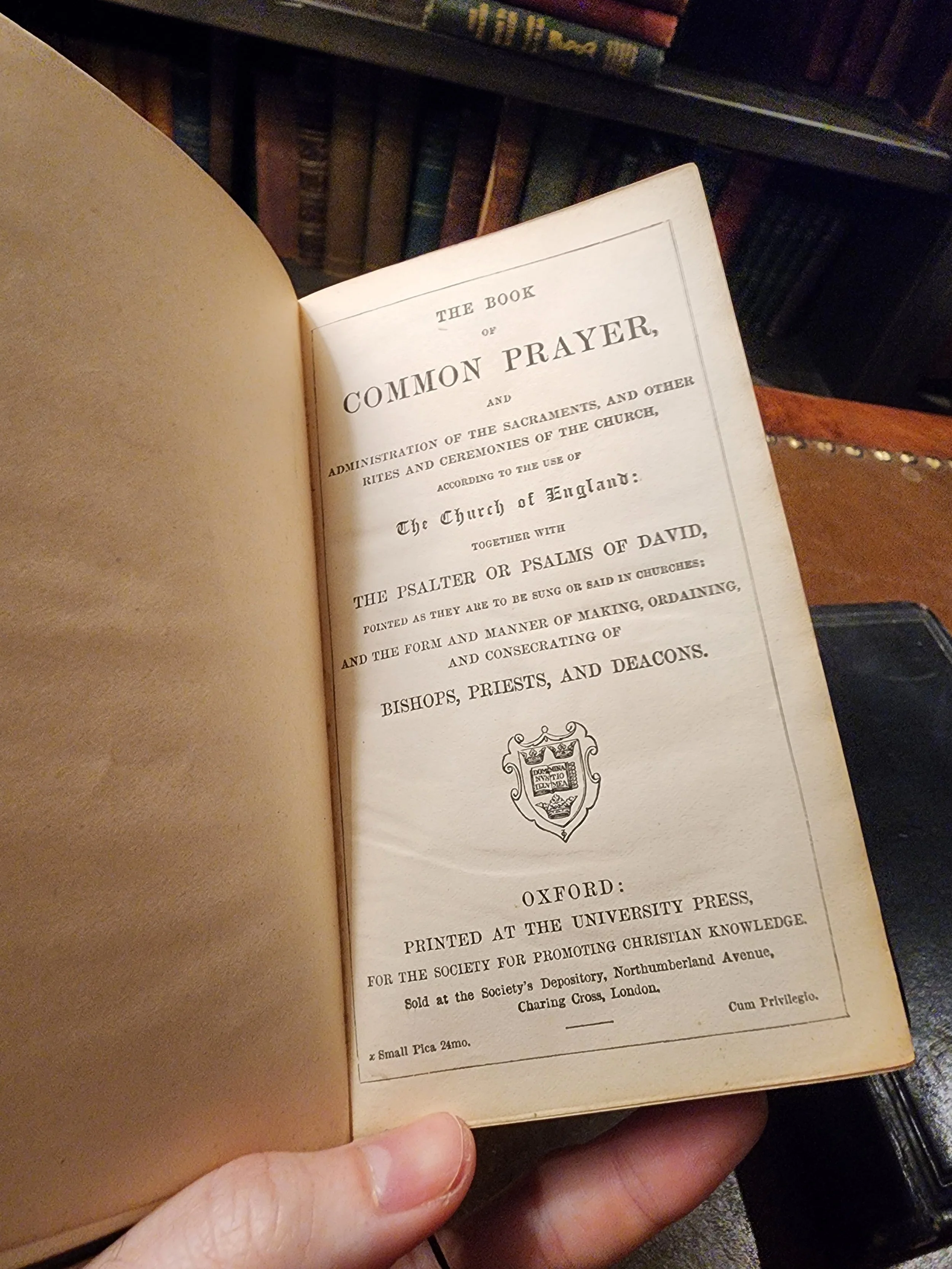
These volumes were printed at the Univeristy Press at Oxford for the Society for Promoting Christian Knowledge.
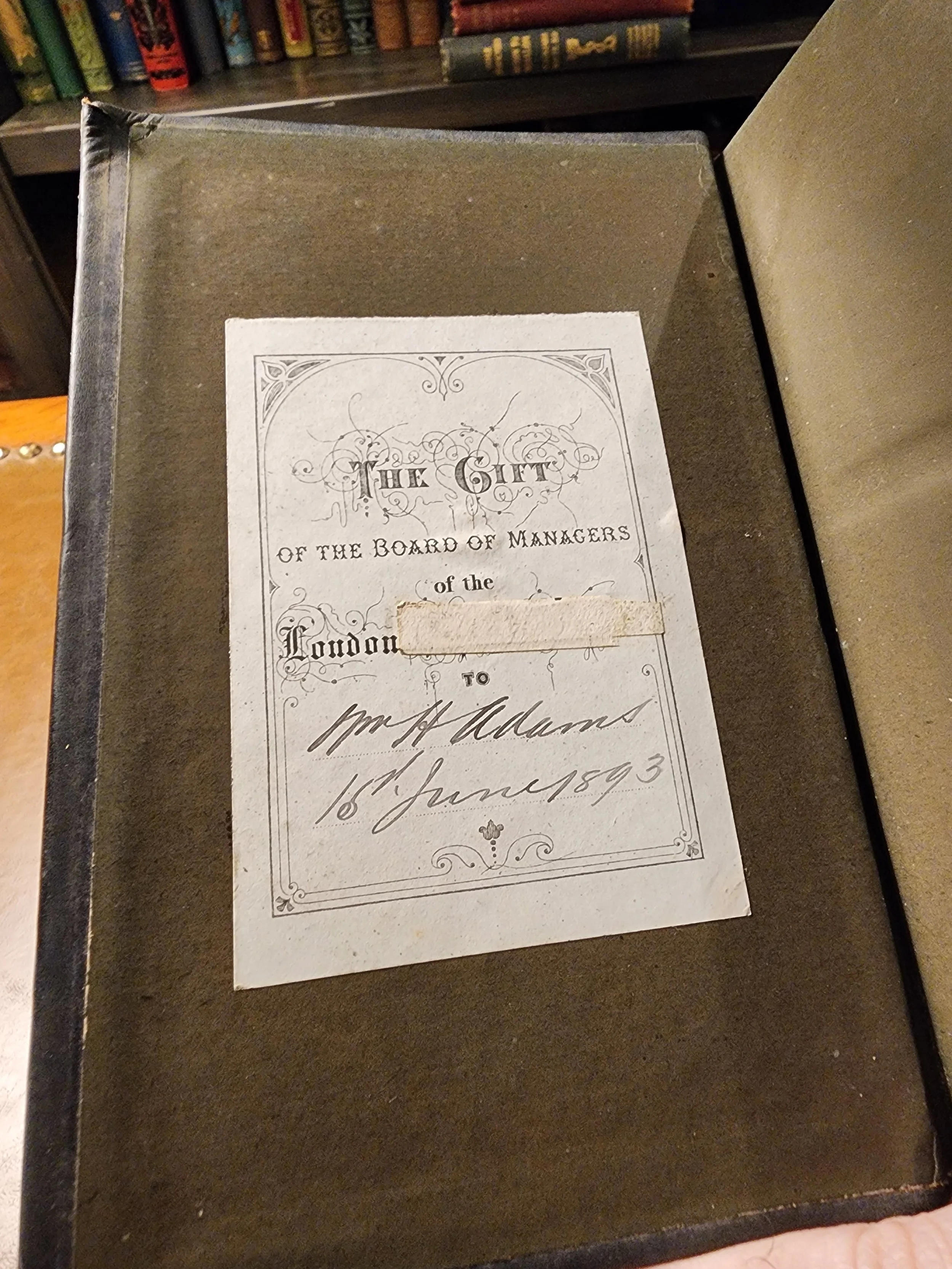
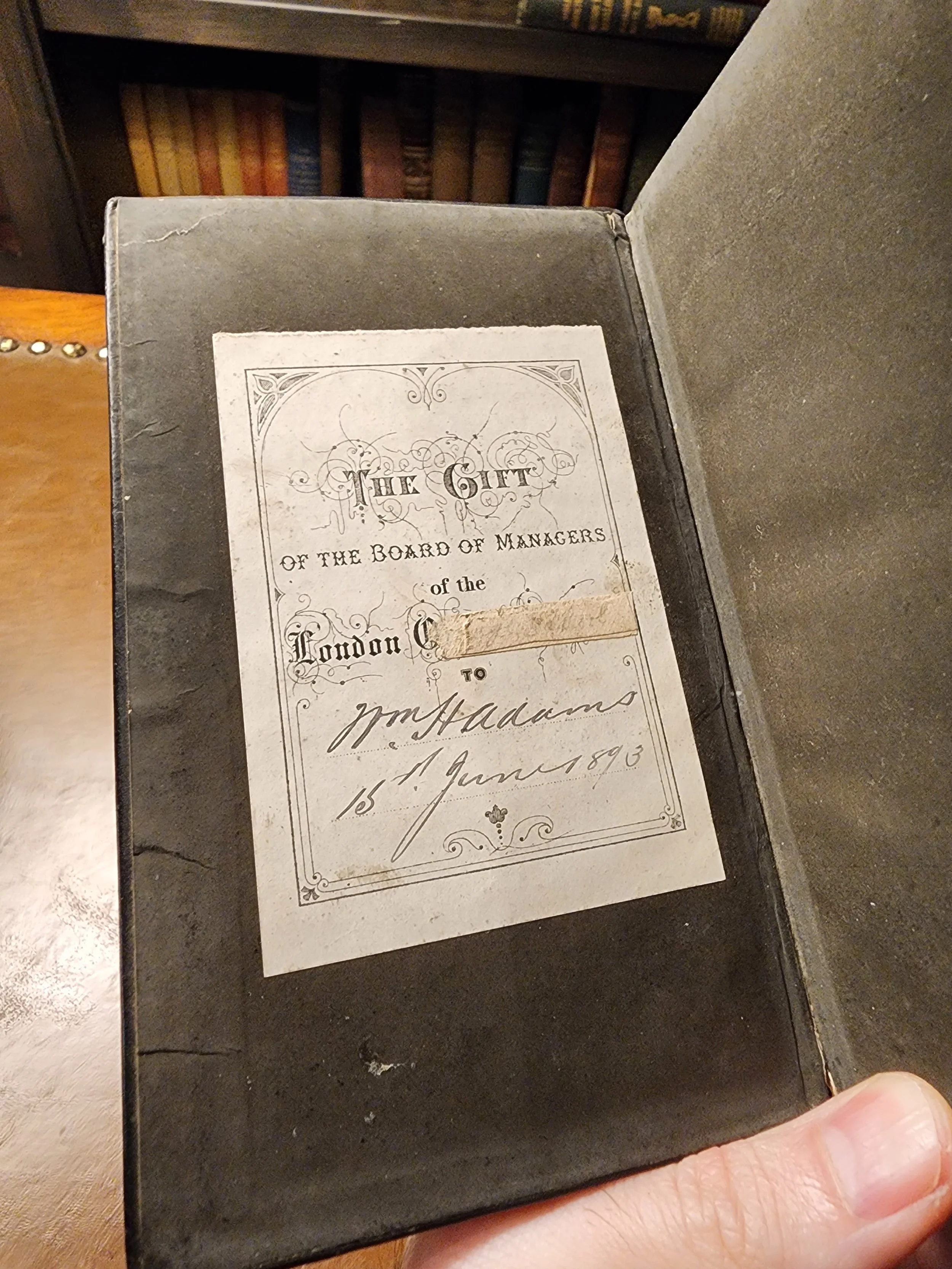
These have matching bookplates indicating they were a gift to the same individual in 1893.
The Bible is a Nonpareil size, which were printed in the general area of 6” x 4”, indicating a “pocket-size” or hand-held size volume with font in the 6-6.5pt. range.
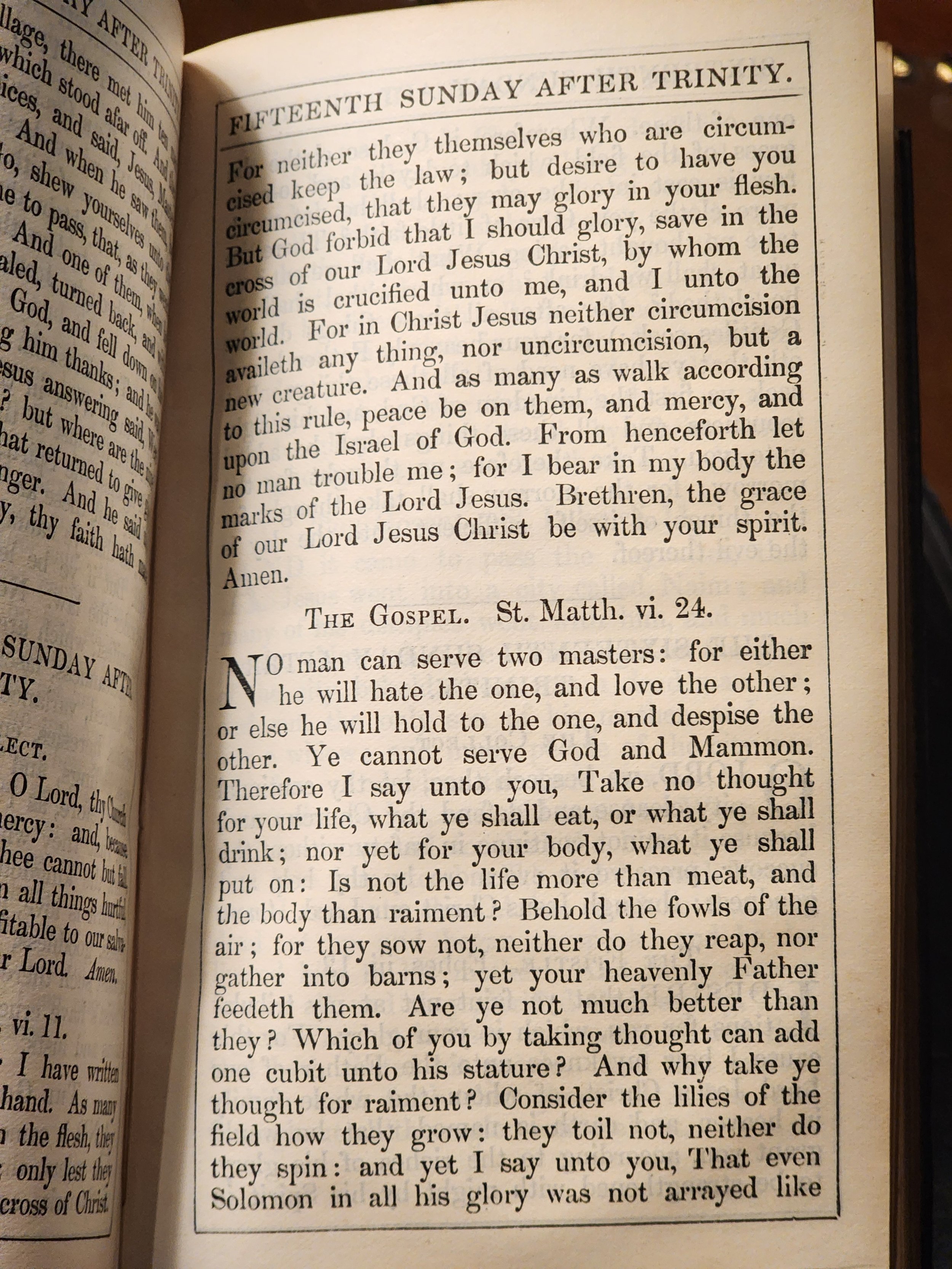
The Book of Common Prayer is a Small Pica printing, which indicates that the primary font is around 11pt.
We do not come across many matching sets of volumes, much less in such supple leather. By theological beliefs, we do not promote adherence to the Common Prayer book, but for historical purposes and some of the comeliness of prayers included, we do find value. The Common Prayer book was (and remains) and institution in the Church of England, or Anglican denomination. Spurgeon commented on it quite often, particularly in early years, but largely as a by-product of its utilization and reliance among the Episcopal government church.
A beautiful black leather matching set of Oxford printings, the Holy Bible (Authorized Version/King James) and Book of Common Prayer, from c.1890.
These volumes were printed at the Univeristy Press at Oxford for the Society for Promoting Christian Knowledge.
These have matching bookplates indicating they were a gift to the same individual in 1893.
The Bible is a Nonpareil size, which were printed in the general area of 6” x 4”, indicating a “pocket-size” or hand-held size volume with font in the 6-6.5pt. range.
The Book of Common Prayer is a Small Pica printing, which indicates that the primary font is around 11pt.
We do not come across many matching sets of volumes, much less in such supple leather. By theological beliefs, we do not promote adherence to the Common Prayer book, but for historical purposes and some of the comeliness of prayers included, we do find value. The Common Prayer book was (and remains) and institution in the Church of England, or Anglican denomination. Spurgeon commented on it quite often, particularly in early years, but largely as a by-product of its utilization and reliance among the Episcopal government church.