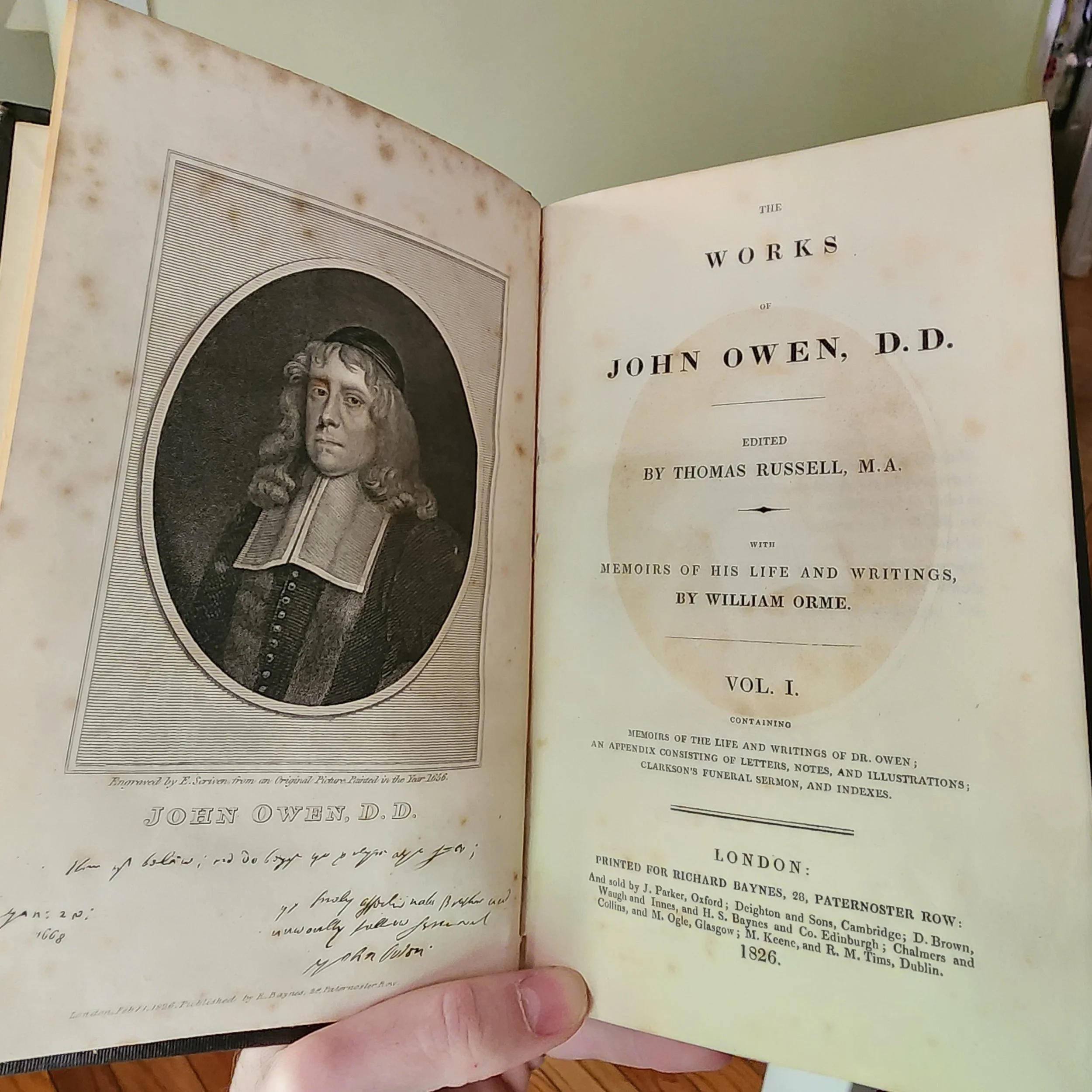
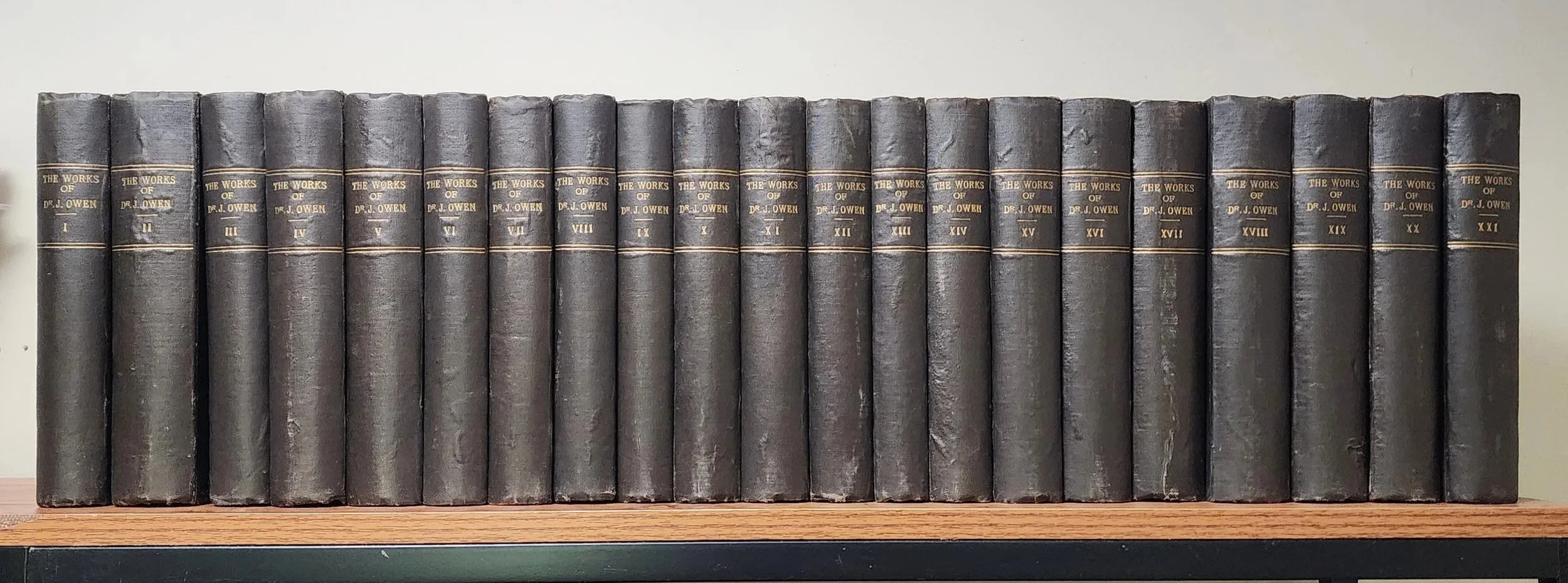
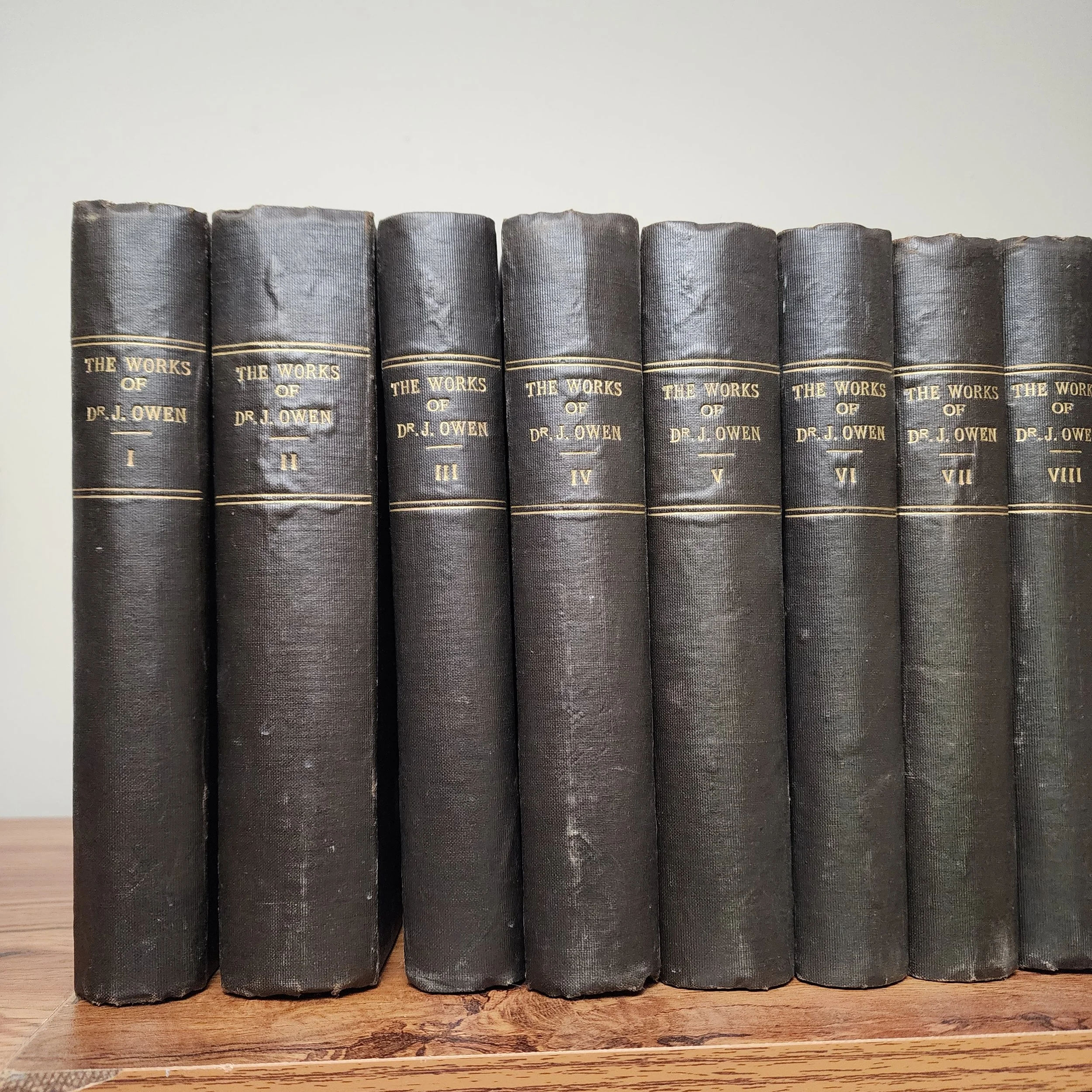
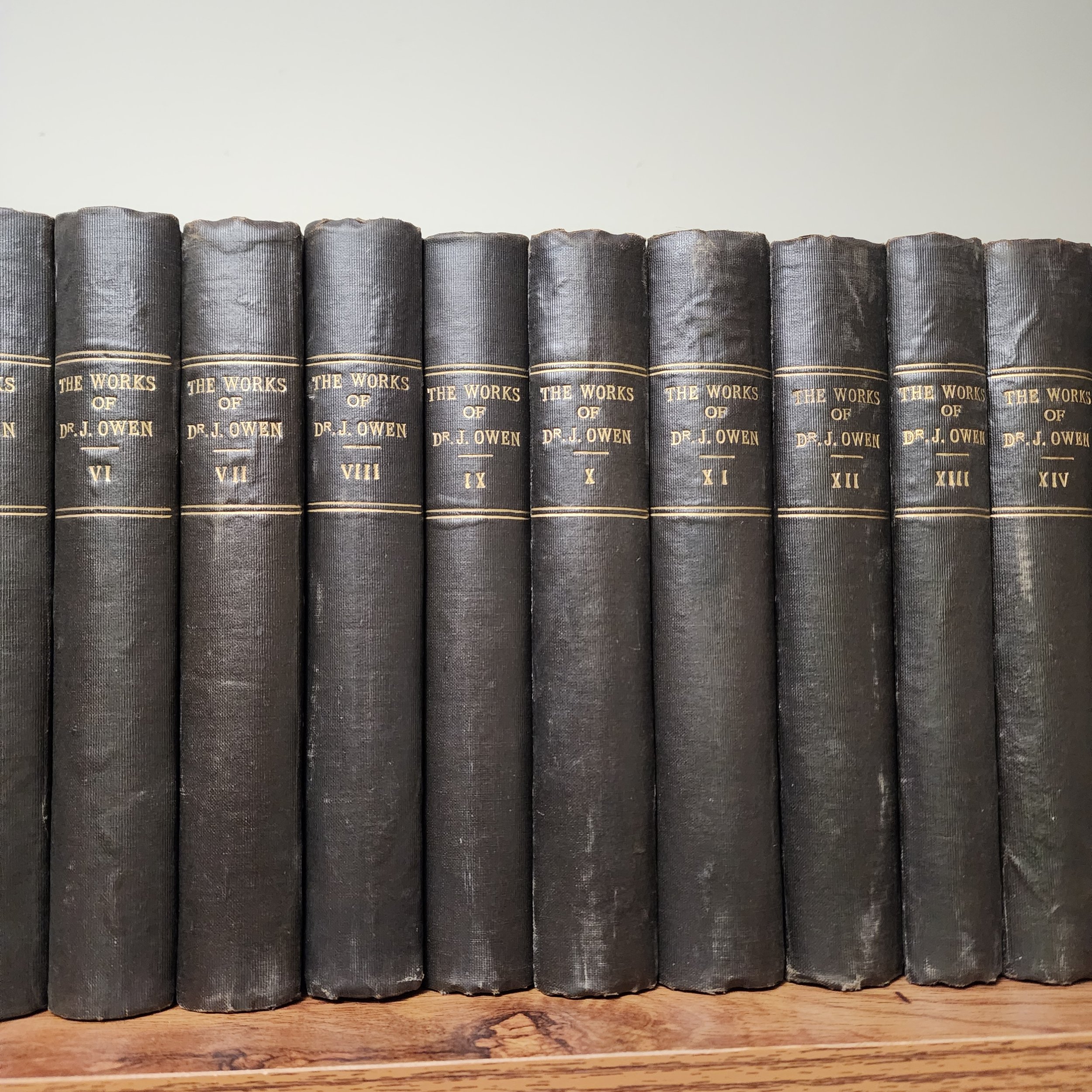
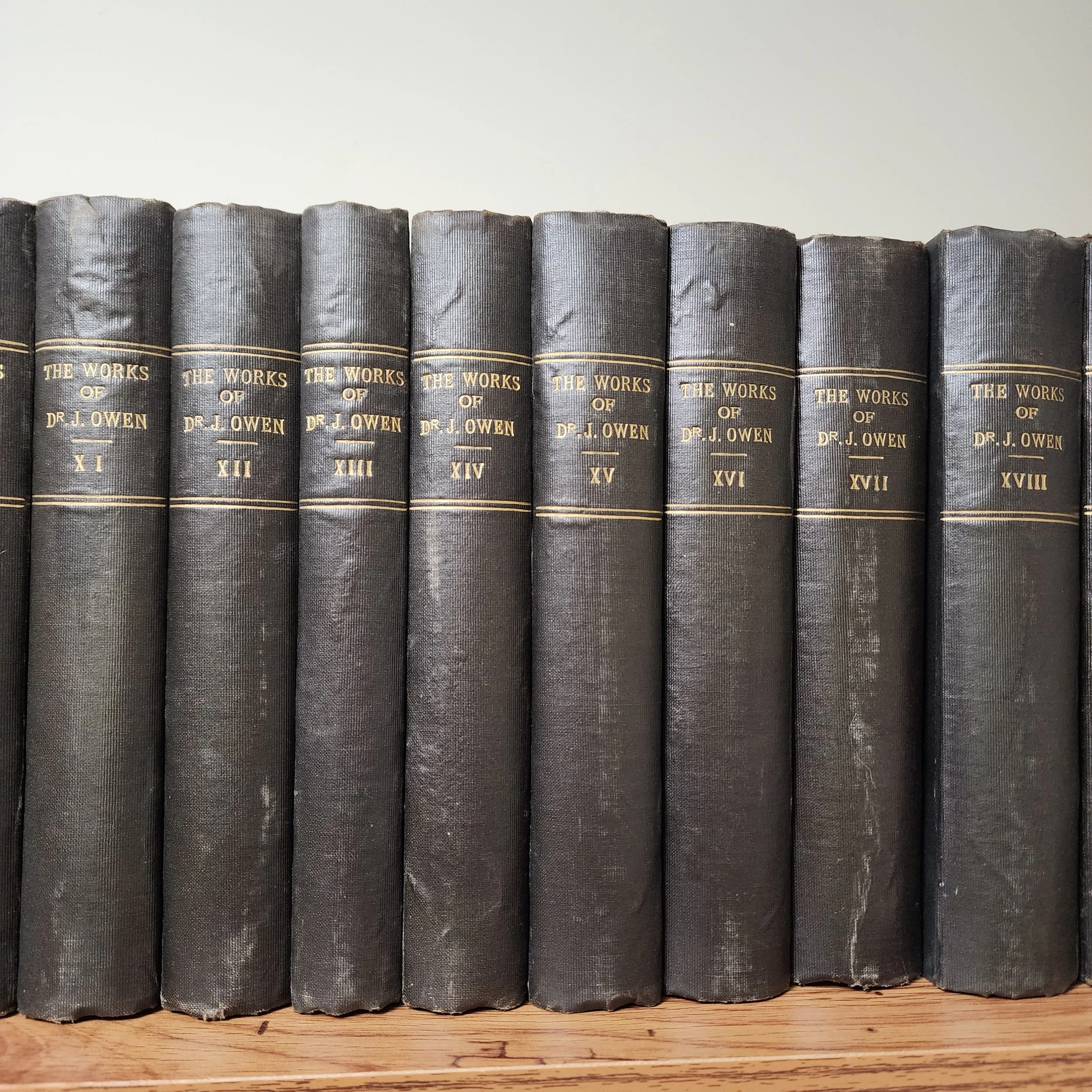
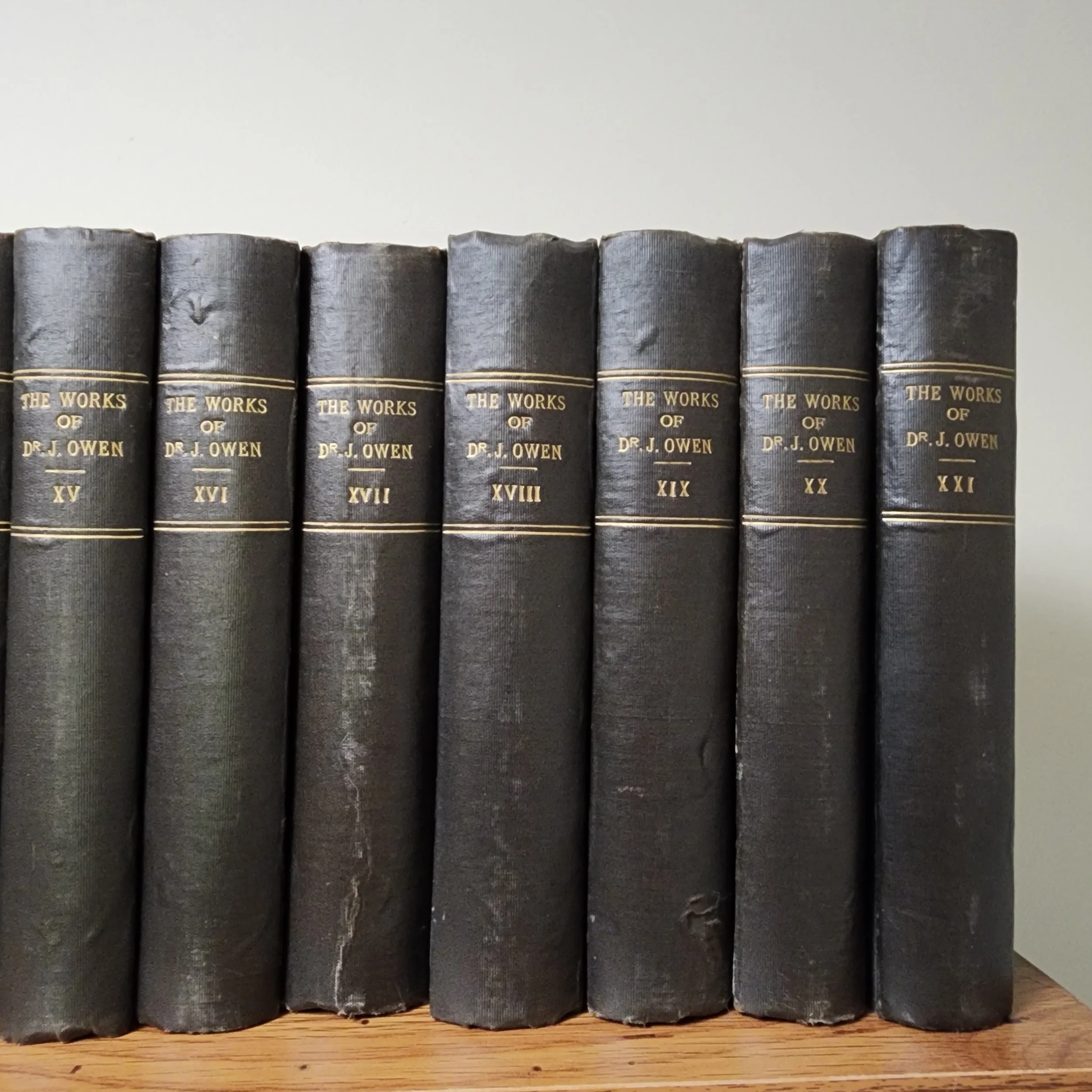
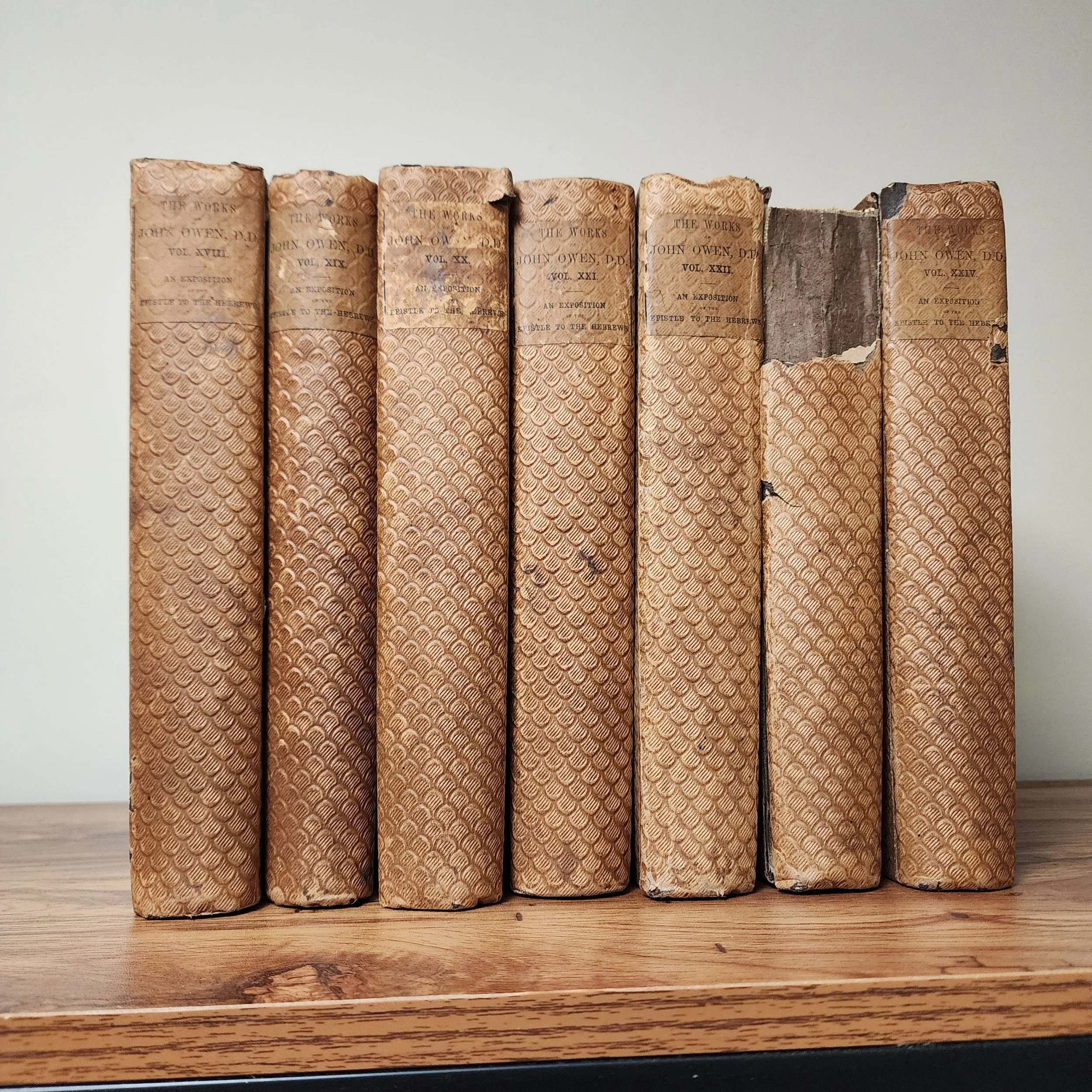
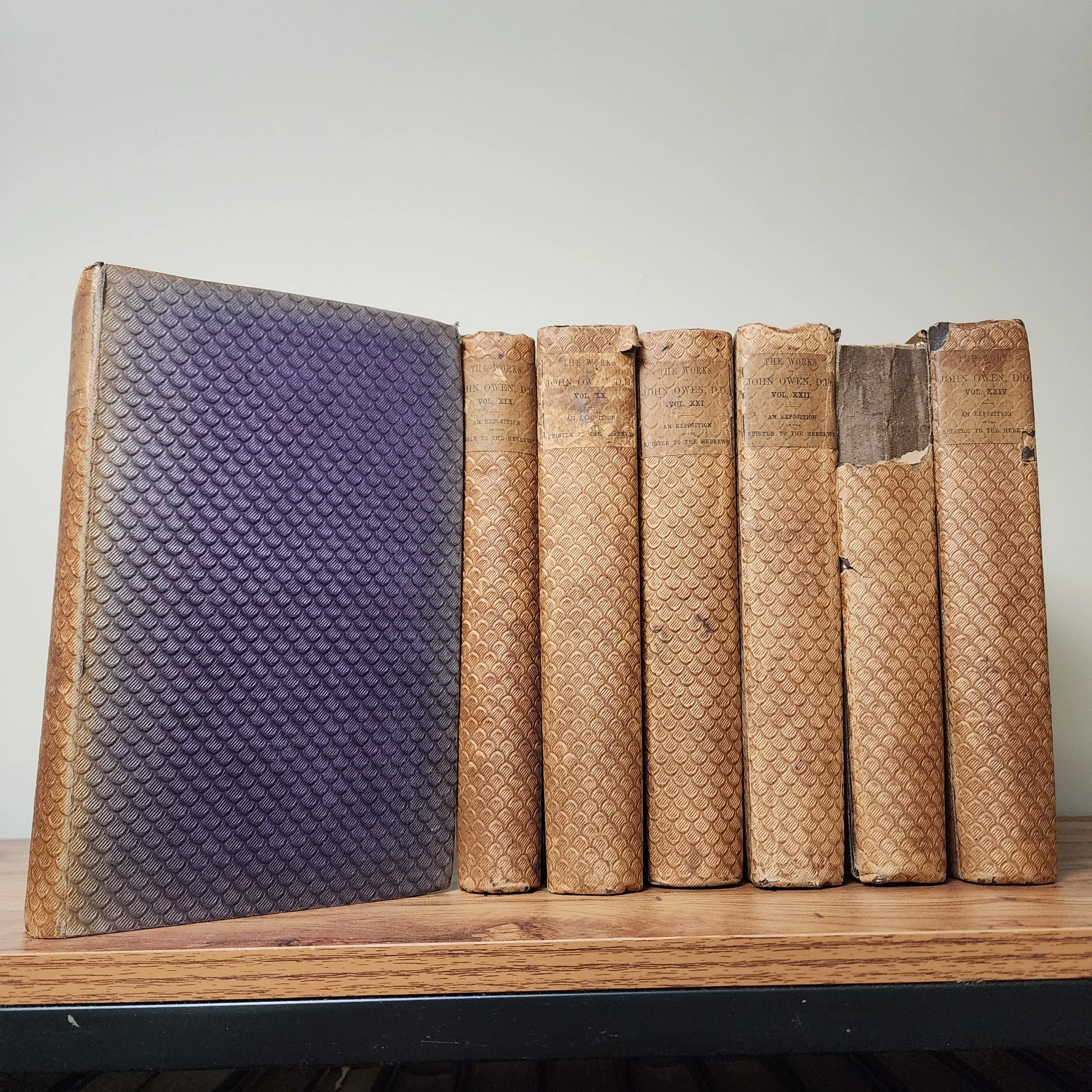
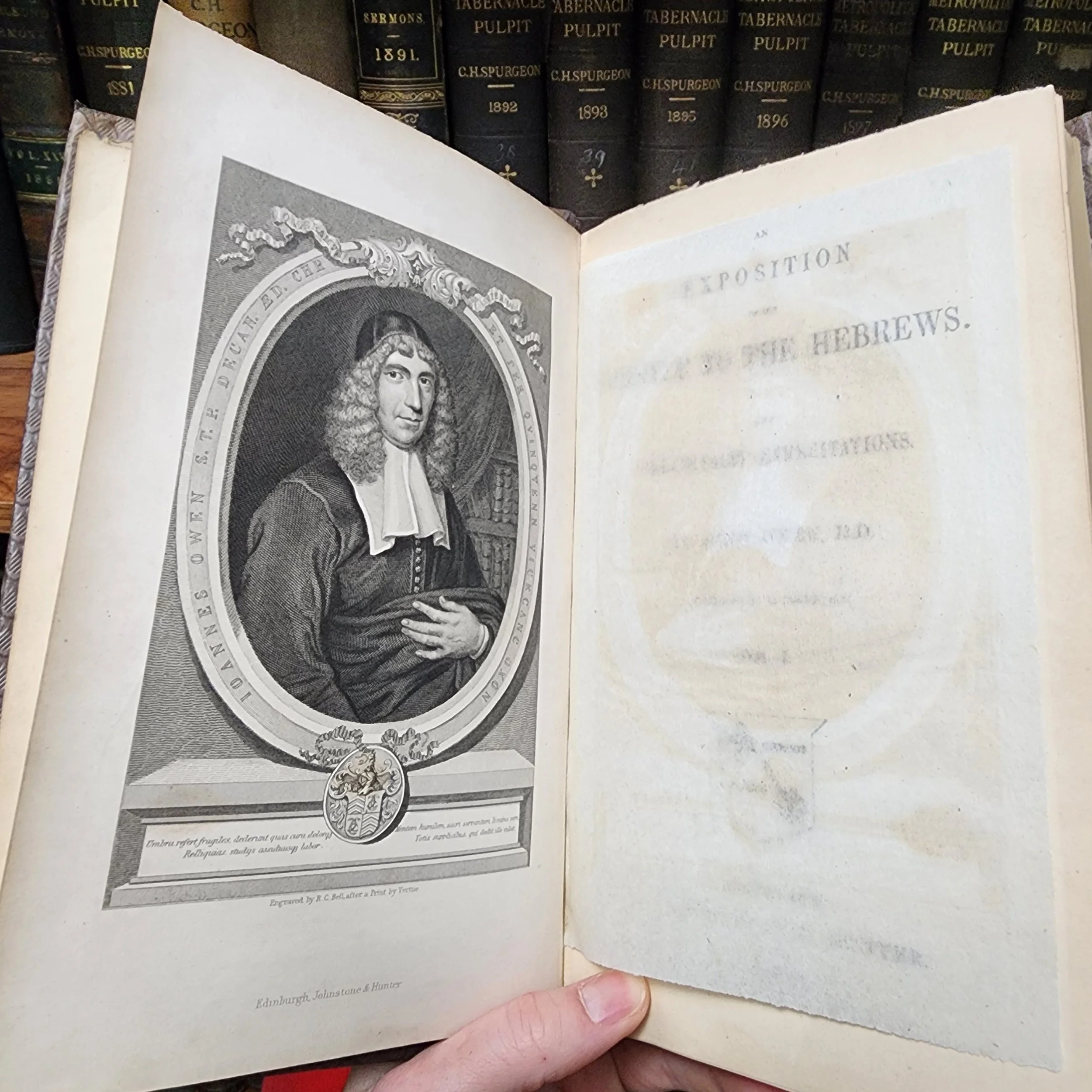
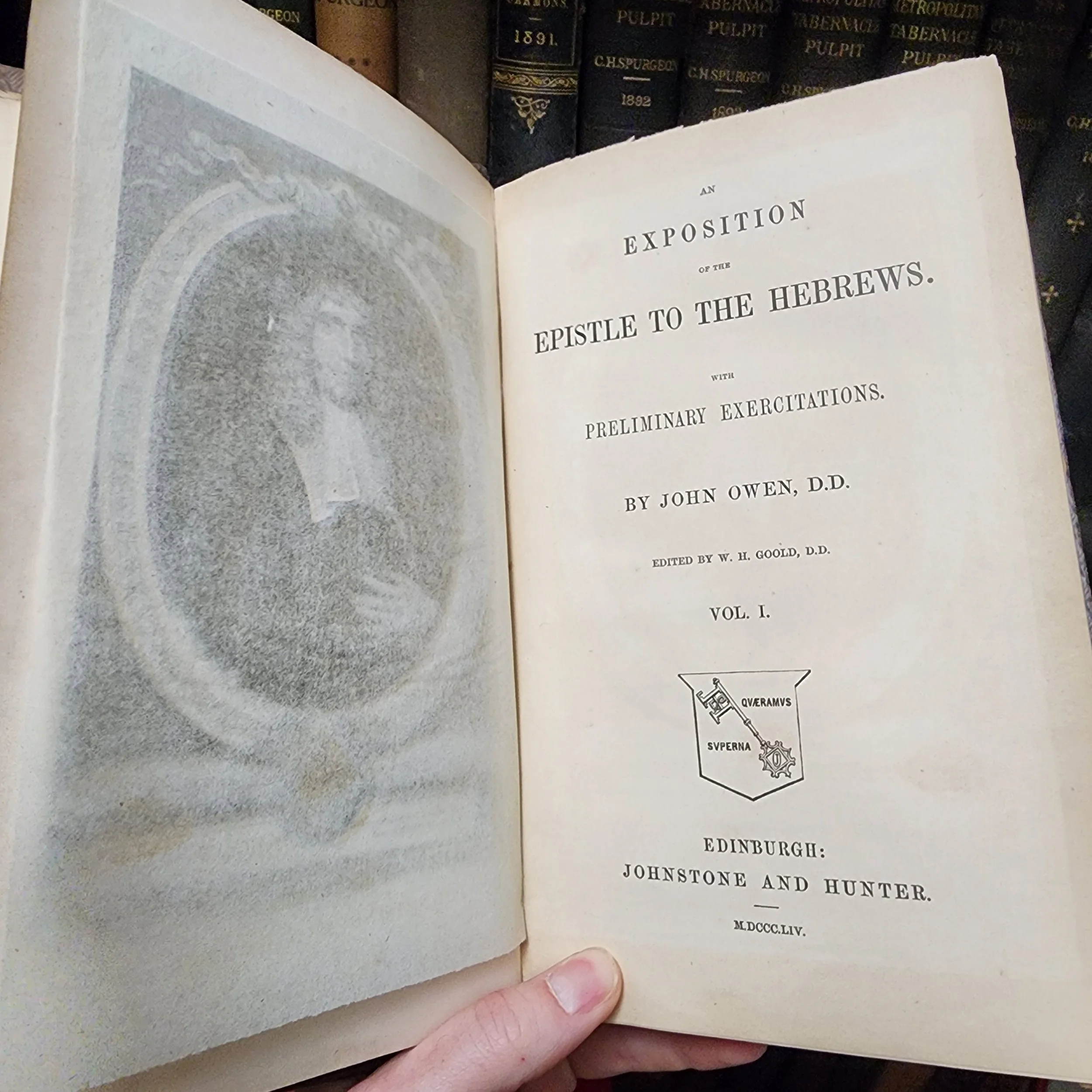
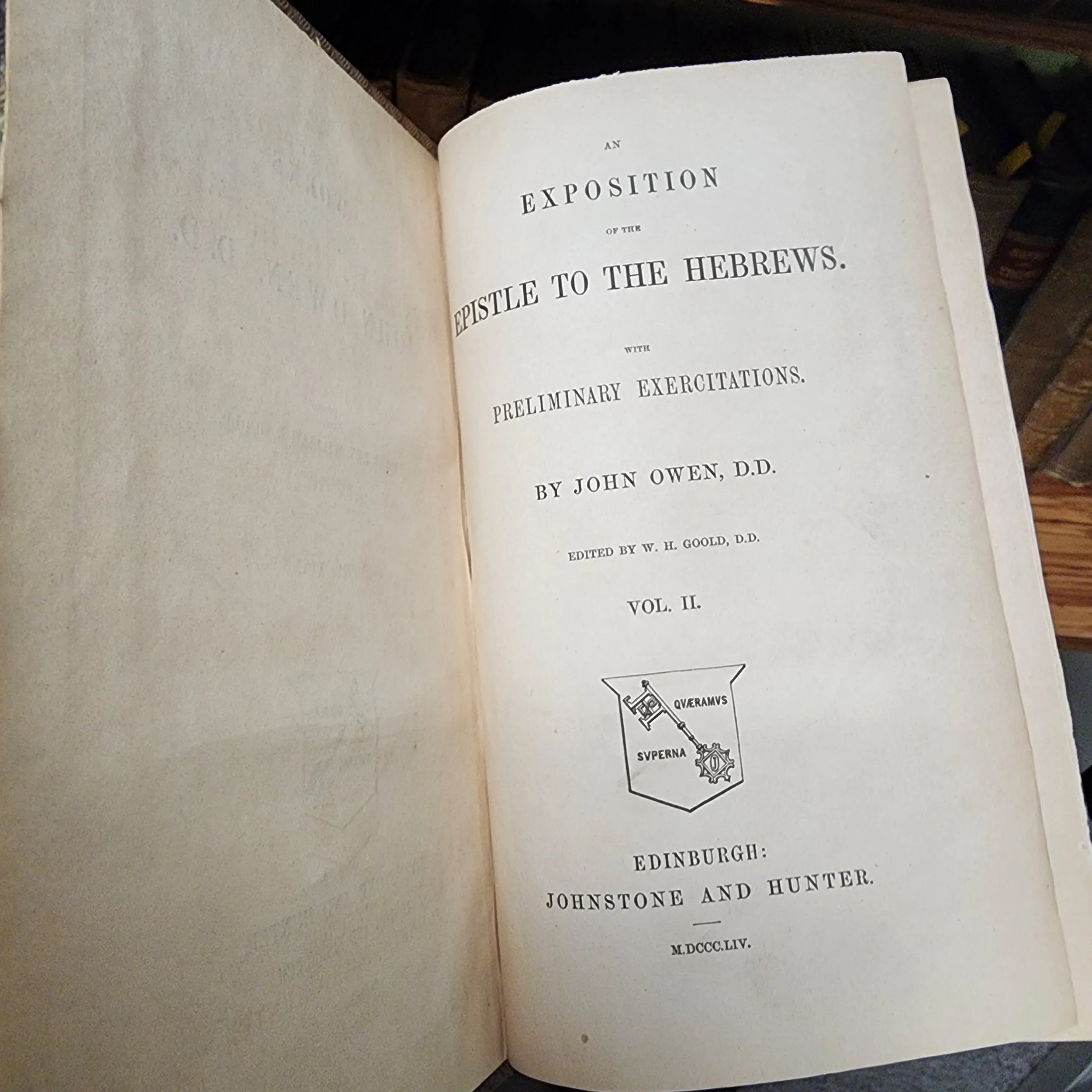
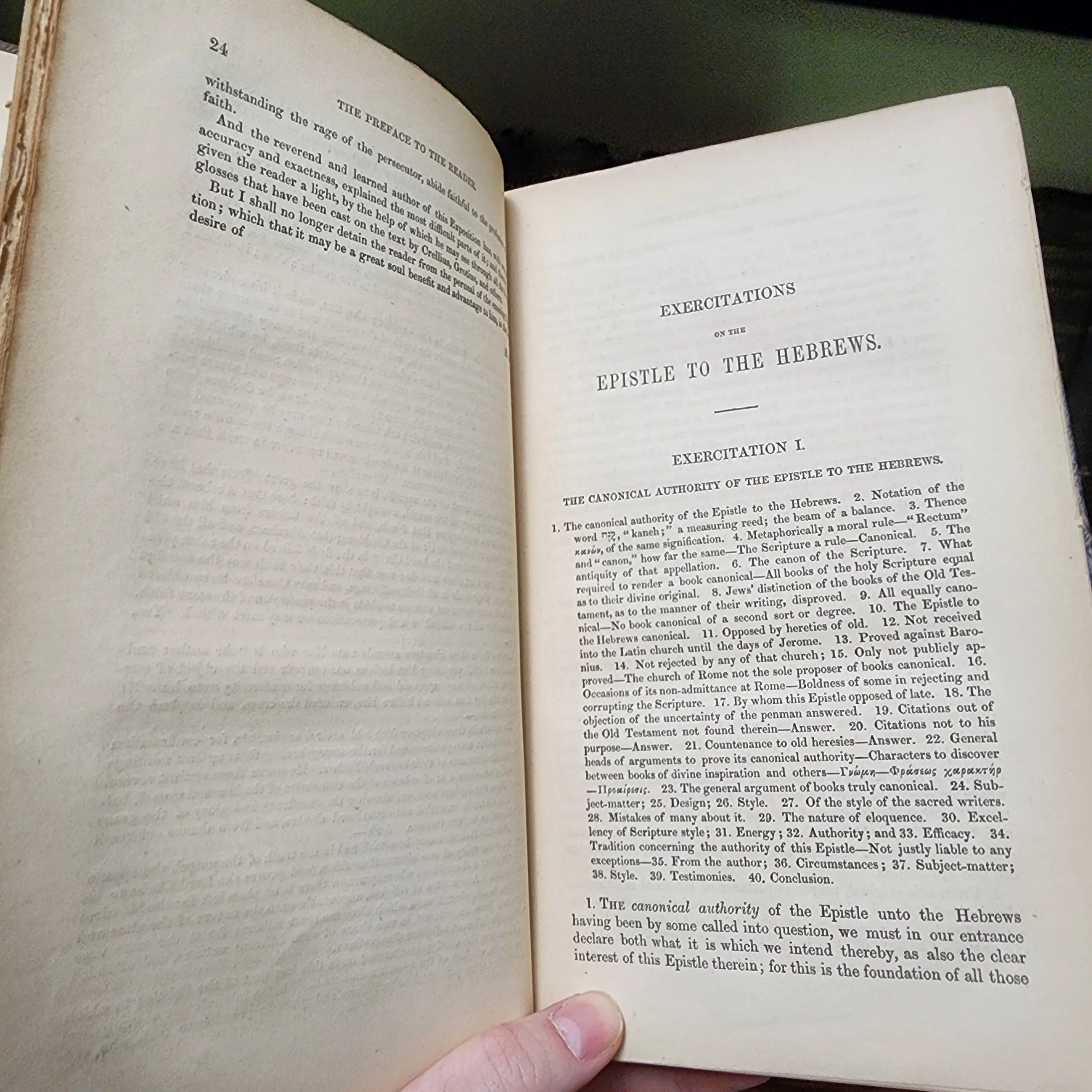
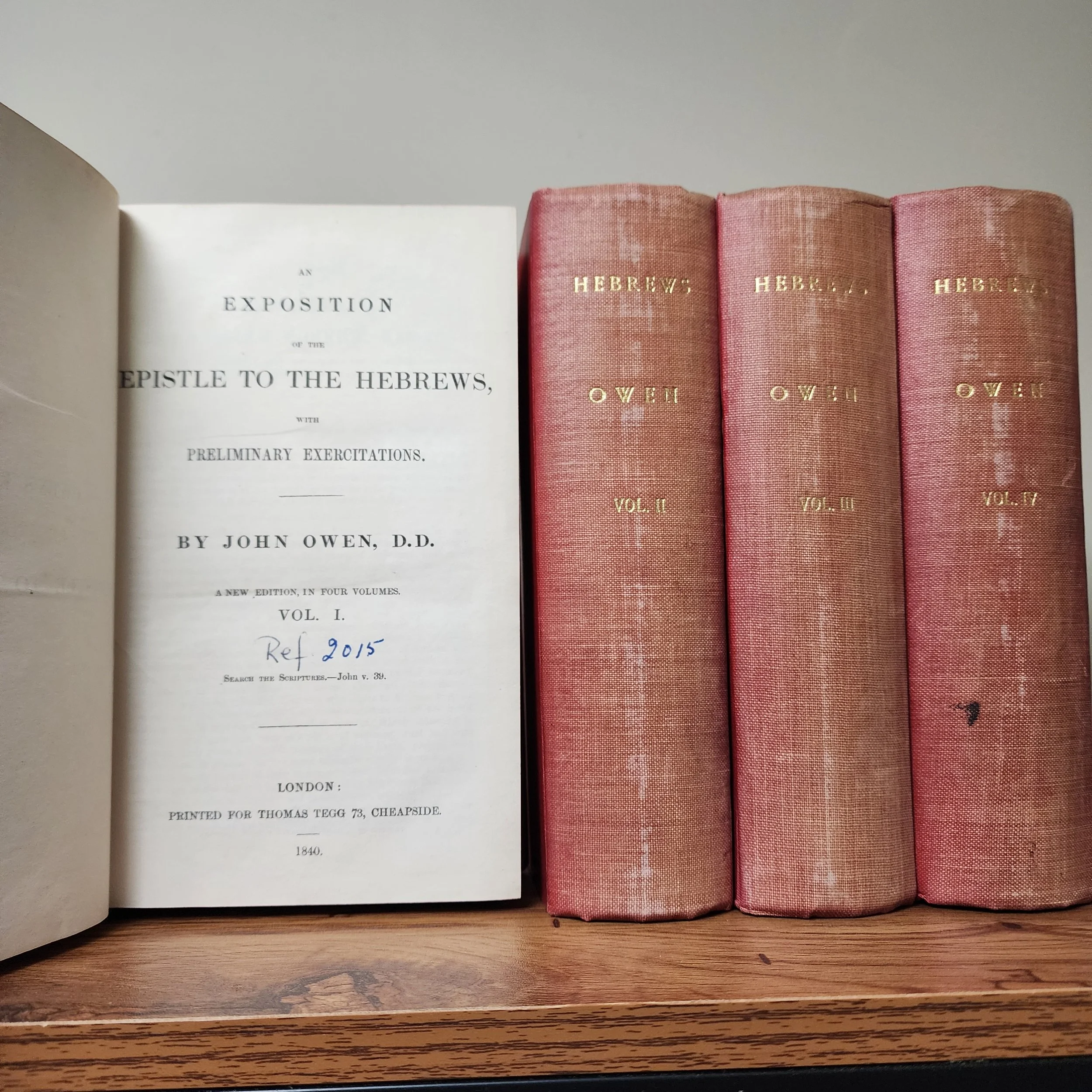
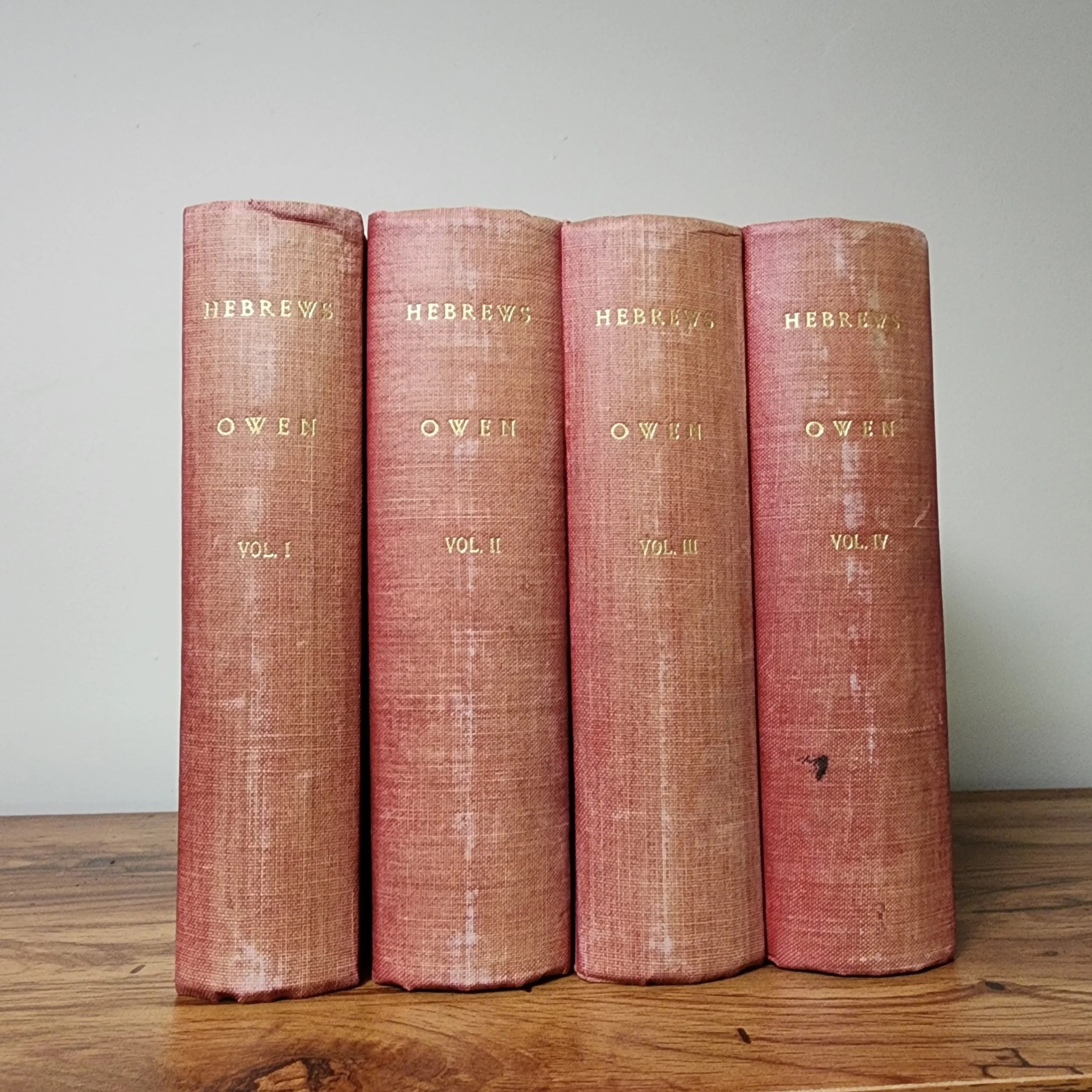
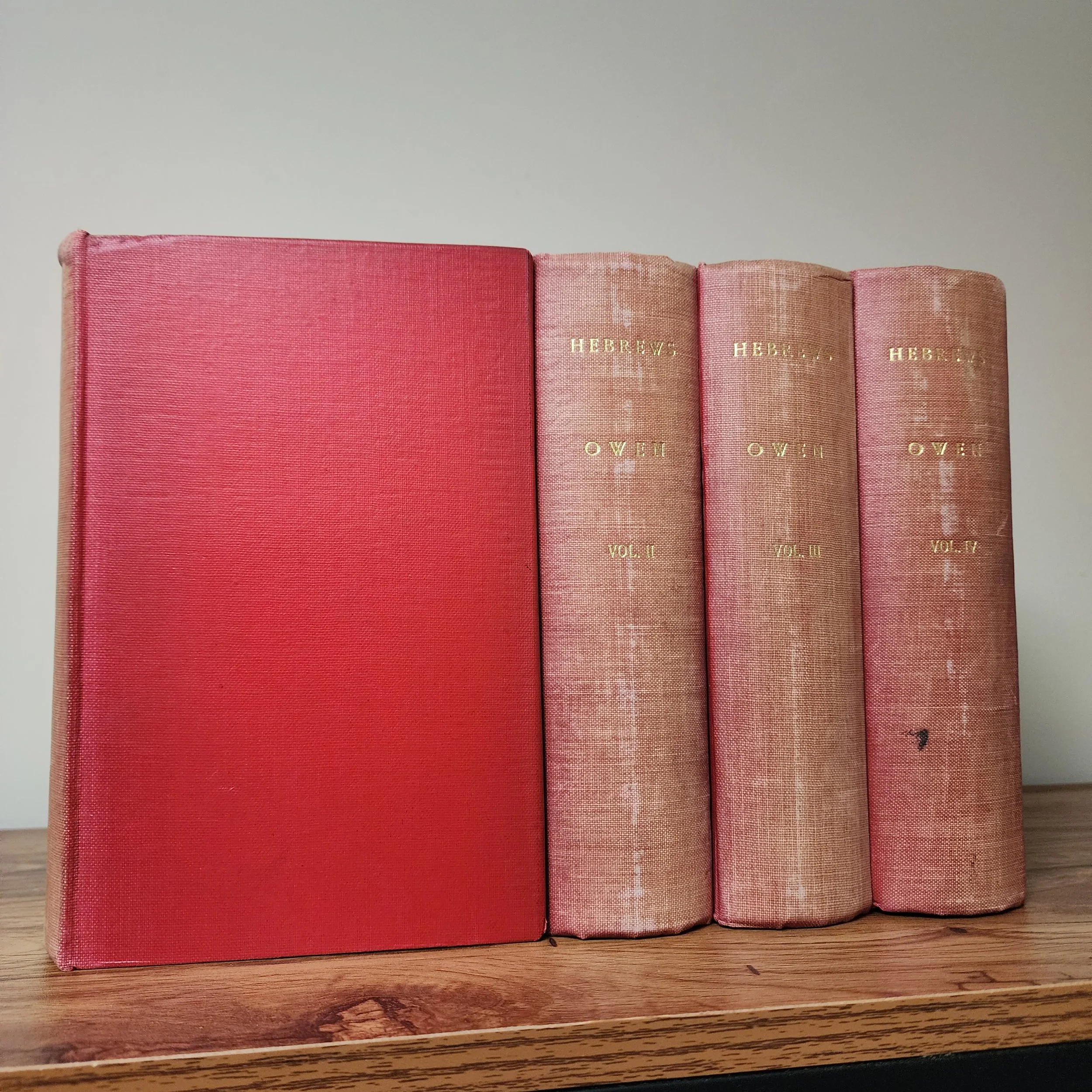
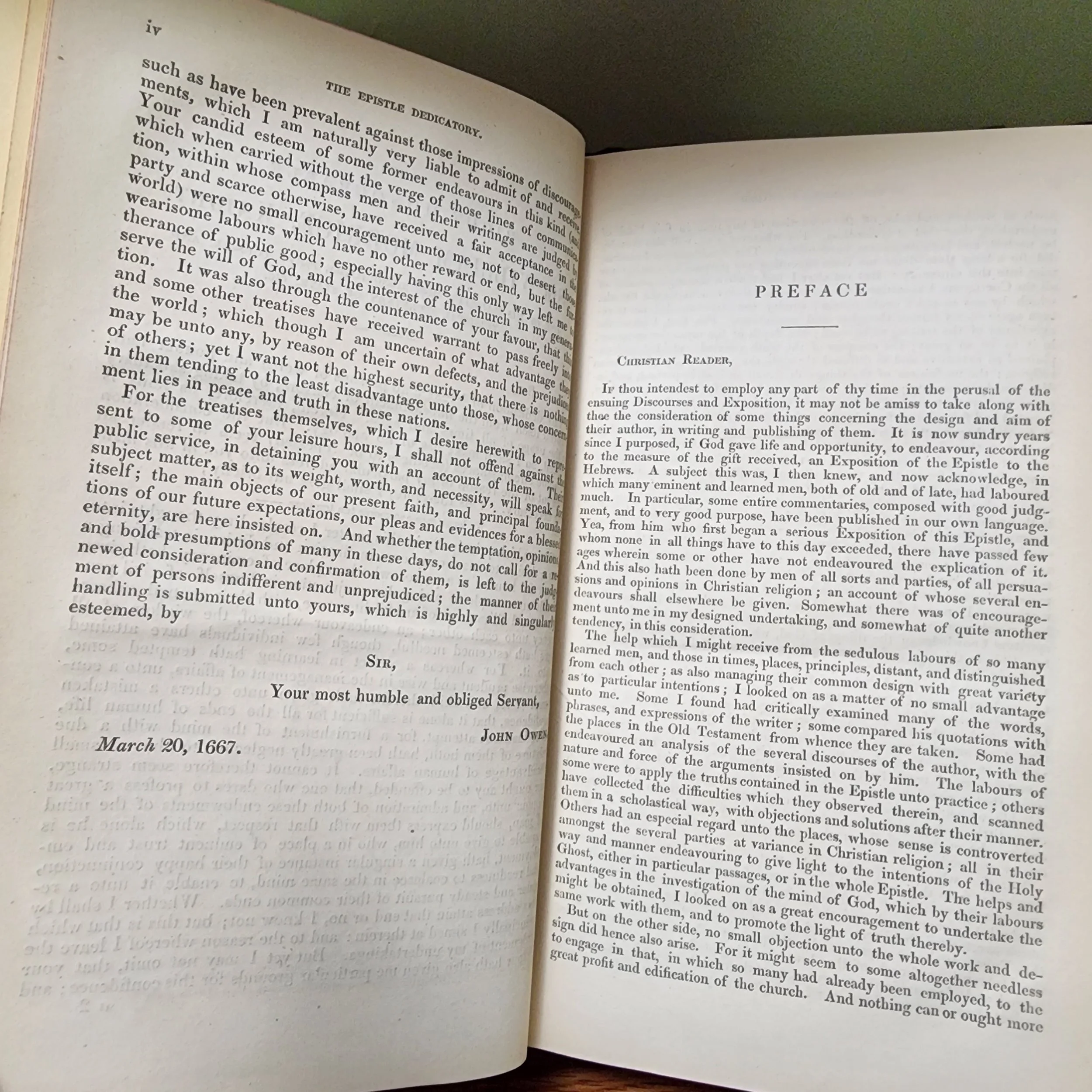
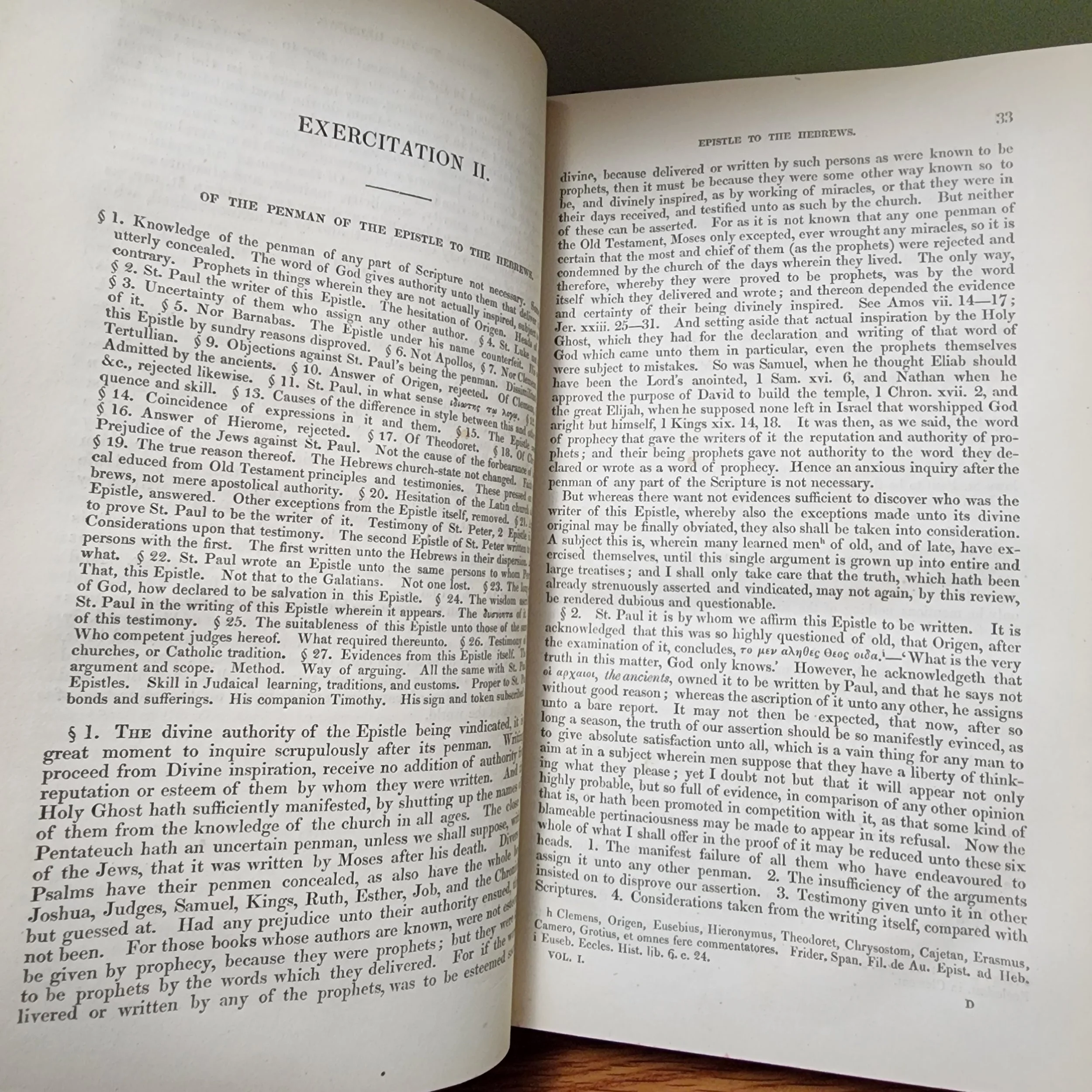
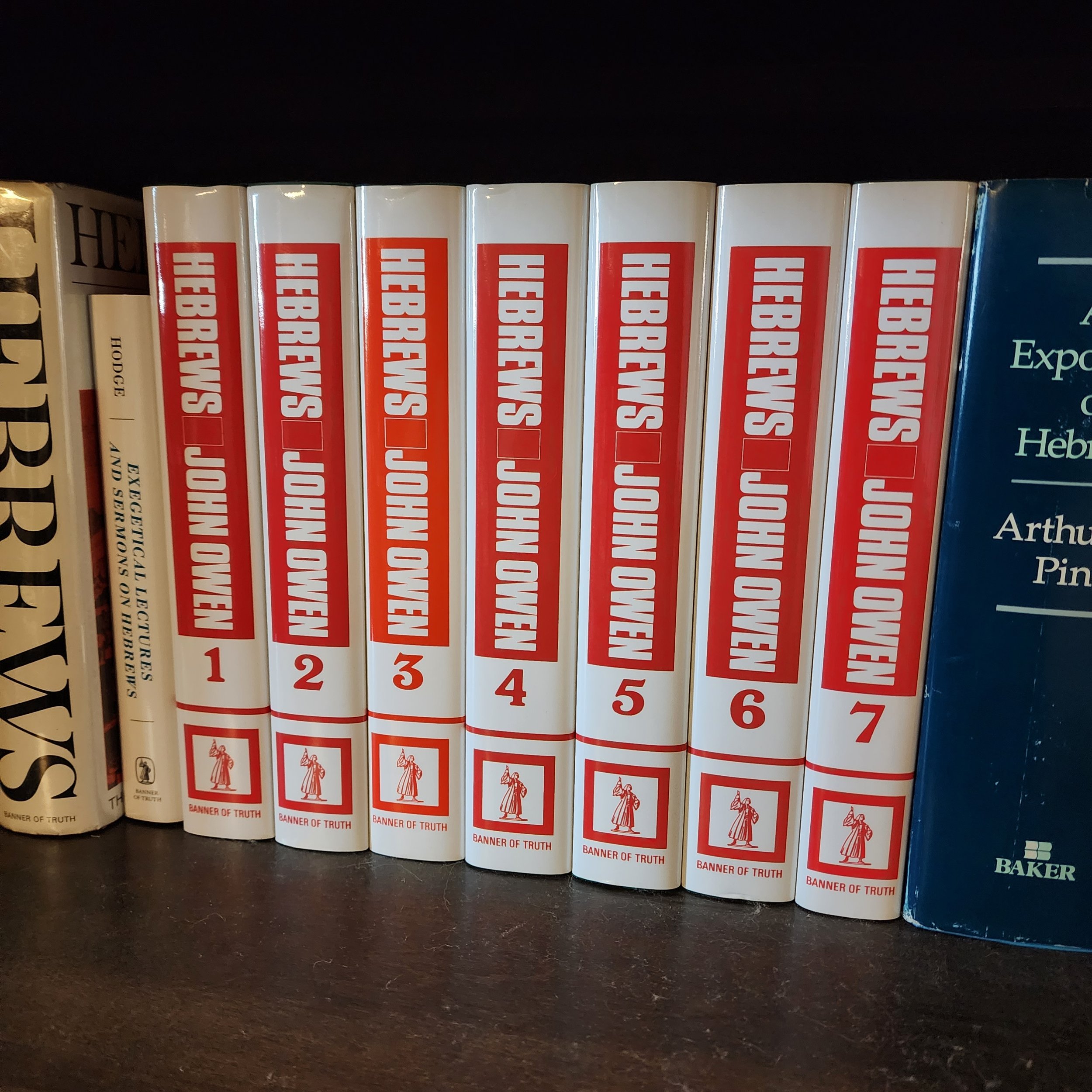
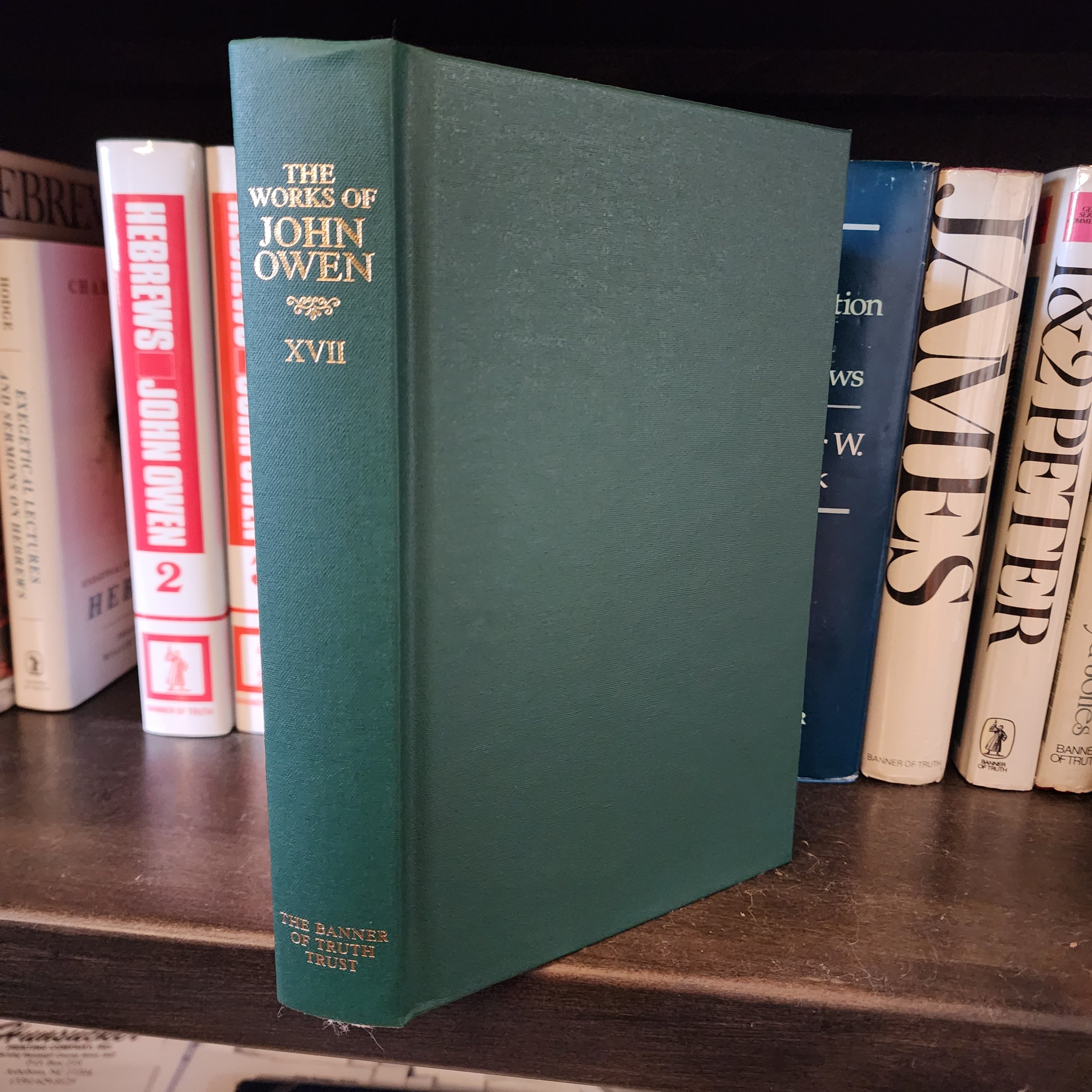
**Rare 21-Volume set of Owen’s Works—the most complete publication of Owen’s material at that time. This is the first true and nearly comprehensive set put together, and would be a treasure to the collector’s library. If you would like to make the set “complete,” see our listing for the 4 vol. Thomas Tegg set of the Exposition of Hebrews or the 7 vol. Johnstone & Hunter set of the same content.**
The 1826 Richard Bayne’s publishing of The Works of John Owen was a foundational subscription printing and update to Owen material in its day. As early as 1721, there were serious considerations made to accumulating Owen’s works together, but it would not be until another century would pass that this publisher would complete the task of putting the most complete collection together to date.
According to the editor of this edition:
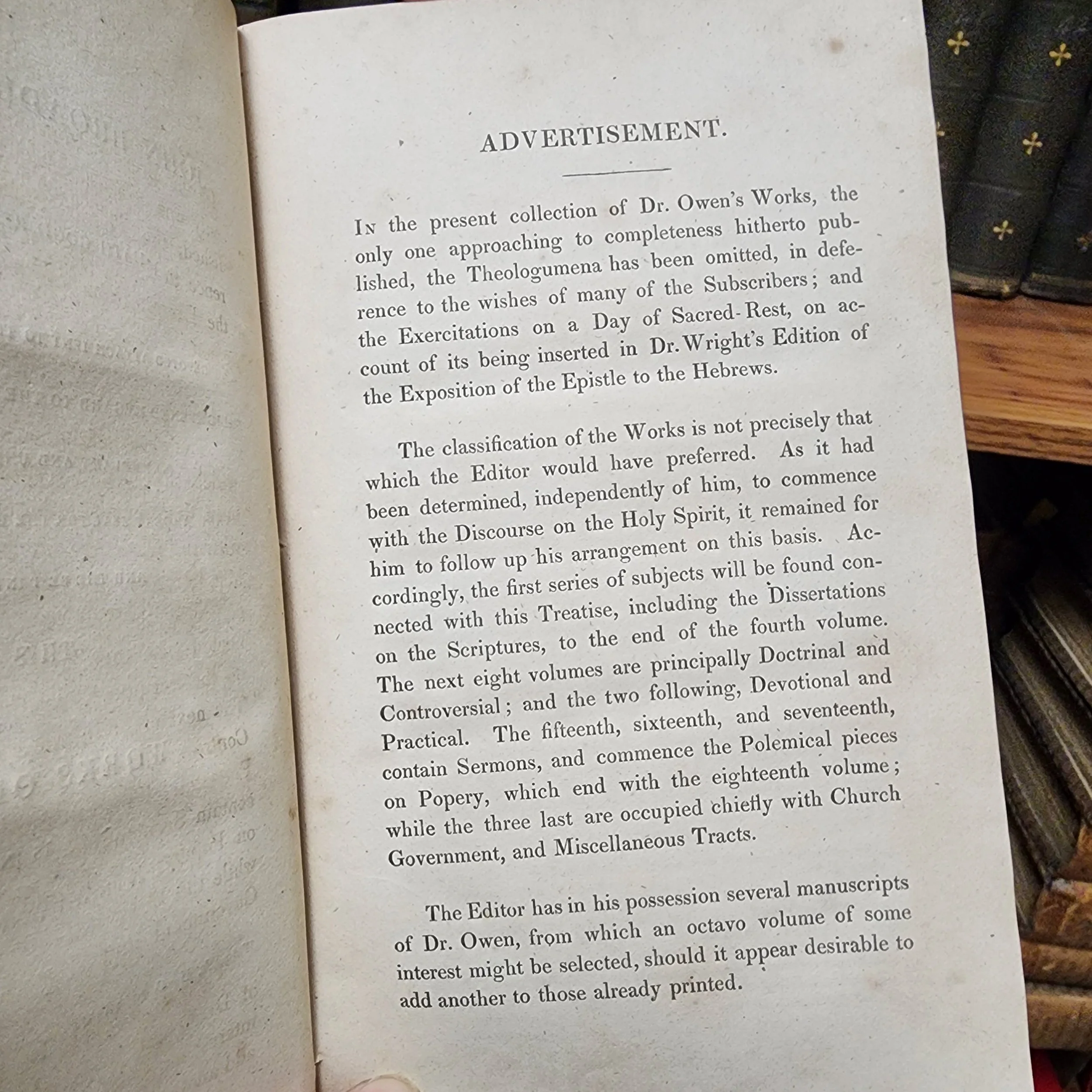
In the present collection of Dr. Owen’s Works, the only one approaching to completeness hitherto published, the Theologumena has been omitted, in deference to the wishes of many of the Subscribers; and the Excertitations on a Day of Sacred-Rest, on account of its being inserted in Dr. Wright’s Edition of the Exposition of the Epistle to the Hebrews.
The classification of the Works is not precisely that which the Editor would have preferred. As it had been determined, independently of him, to commence with the Discourse on the Holy Spirit, it remained for him to follow up his arrangement on this basis. Accordingly, the first series of subjects will be found connected with this Treatise, including the Dissertations on the Scriptures, to the end of the fourth volume. The next eight volumes are principally Doctrinal and Controversial; and the two following, Devotional and Practical. The fifteenth, sixteenth, and seventeenth, contain Sermons, and commence the Polemical pieces on Popery, which end with the eighteenth volume; while the three last are occupied chiefly with Church Government, and Miscellaneous Tracts.
According to the editor of the later (c.1862) Works of John Owen by T&T Clark:
The credit of this undertaking is due to the enterprise of Mr. Baynes, the London publisher. The edition was comprised of twenty-one octavo volumes,—the first, however, consisting of the Memoir of Owen’s Life and Writings by Mr. Orme,—and was printed under the editorial care of Mr. Russell, a Dissenting minister in the neighbourhood of London. As the first attempt to collect the works of Owen,—an attempt, the difficulty of which may be inferred from the fact that in his lifetime OWen himself had for years lost sight of some of his own treatises,—and to publish them in a respectable form, it deserved well of the Christian public; and was indeed favourably received, for the subscribers to it rose to the number of three hundred and forty-six, and the impression, it is believed, has long been since exhausted.
The price at which, whether from its scarcity or its size, the edition of 1826 stood, prevented many from purchasing it who cherised an admiration for the writings of this great Nonconformist divine. A strong desire was evinced, in various ways, that his works might be issued in a form more accessible to the generality of the religious community.
**Rare 21-Volume set of Owen’s Works—the most complete publication of Owen’s material at that time. This is the first true and nearly comprehensive set put together, and would be a treasure to the collector’s library. If you would like to make the set “complete,” see our listing for the 4 vol. Thomas Tegg set of the Exposition of Hebrews or the 7 vol. Johnstone & Hunter set of the same content.**
The 1826 Richard Bayne’s publishing of The Works of John Owen was a foundational subscription printing and update to Owen material in its day. As early as 1721, there were serious considerations made to accumulating Owen’s works together, but it would not be until another century would pass that this publisher would complete the task of putting the most complete collection together to date.
According to the editor of this edition:
In the present collection of Dr. Owen’s Works, the only one approaching to completeness hitherto published, the Theologumena has been omitted, in deference to the wishes of many of the Subscribers; and the Excertitations on a Day of Sacred-Rest, on account of its being inserted in Dr. Wright’s Edition of the Exposition of the Epistle to the Hebrews.
The classification of the Works is not precisely that which the Editor would have preferred. As it had been determined, independently of him, to commence with the Discourse on the Holy Spirit, it remained for him to follow up his arrangement on this basis. Accordingly, the first series of subjects will be found connected with this Treatise, including the Dissertations on the Scriptures, to the end of the fourth volume. The next eight volumes are principally Doctrinal and Controversial; and the two following, Devotional and Practical. The fifteenth, sixteenth, and seventeenth, contain Sermons, and commence the Polemical pieces on Popery, which end with the eighteenth volume; while the three last are occupied chiefly with Church Government, and Miscellaneous Tracts.
According to the editor of the later (c.1862) Works of John Owen by T&T Clark:
The credit of this undertaking is due to the enterprise of Mr. Baynes, the London publisher. The edition was comprised of twenty-one octavo volumes,—the first, however, consisting of the Memoir of Owen’s Life and Writings by Mr. Orme,—and was printed under the editorial care of Mr. Russell, a Dissenting minister in the neighbourhood of London. As the first attempt to collect the works of Owen,—an attempt, the difficulty of which may be inferred from the fact that in his lifetime OWen himself had for years lost sight of some of his own treatises,—and to publish them in a respectable form, it deserved well of the Christian public; and was indeed favourably received, for the subscribers to it rose to the number of three hundred and forty-six, and the impression, it is believed, has long been since exhausted.
The price at which, whether from its scarcity or its size, the edition of 1826 stood, prevented many from purchasing it who cherised an admiration for the writings of this great Nonconformist divine. A strong desire was evinced, in various ways, that his works might be issued in a form more accessible to the generality of the religious community.